Skip to main content Scroll Top
Instruments from all over the world!

Zither - Raft zither - Yomkwo

Add to favorites
Added to Cart View Cart Checkout
Added to Wishlist View Wishlist
Removed from Wishlist
Information
Dimensions 497 × 290 × 25 mm
Name of musical instrument

Type of musical instrument

Typical place of occurrence

Date of manufature of instrument

Place of manufacture

Made by

Restored by

Scale

Number of strings

How to play musical instrument

Continent

Country

Sharing:
Categories:
Labels:

Zither - Raft zither - Yomkwo

Information
Dimensions 497 × 290 × 25 mm
Name of musical instrument

Type of musical instrument

Typical place of occurrence

Date of manufature of instrument

Place of manufacture

Made by

Restored by

Scale

Number of strings

How to play musical instrument

Continent

Country

Sharing:
Categories:
Labels:

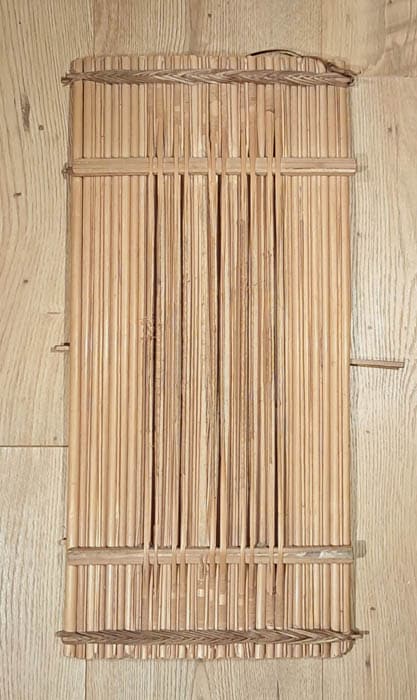
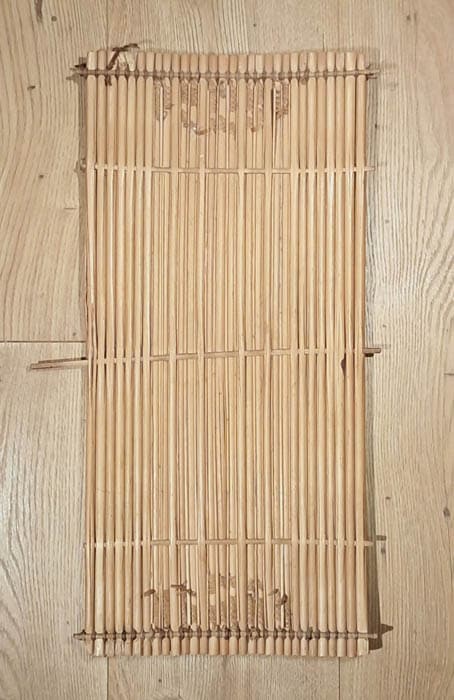
In fact, raft zithers are made up of several tuber zithers attached to each other. The tubes may be fitted with rattling nutshells for special effects, or a pumpkin resonator may be fitted under the zither to enhance resonance. Raft zithers are typically idiochord instruments, with the strings formed from the tubes that serve as the body of the instrument. The tubes are made of reed, bamboo or millet. Wooden sticks are slid under the strings, which are slit lengthwise, to lift the strings. Since the sound of the instrument is not strong enough on its own, a resonator made of larger cabochons is often attached under the raft. There are scattered records of the spread of the raft zither instrument type outside Africa in central and northeastern India, therefore organologists early on suggested the possibility of an early historical connection (Hornbostel, 1933, 289). Raft zither types survive among the Magh (Arakan) in Bengal and Bangladesh and the Gondi in central India (Sachs, 1929, 140). Since the Gondi belong to the Dravidian ethnic group and the Magh belong to the ancient Tibeto-Burman-speaking ethnic groups, it is probable that Raft zither types may also have appeared in Africa through an early, as yet not fully explored, ancient immigration from India (Sachs, 1940, 233). 

The African range of spread of raft zithers is Egypt, Sudan, Nigeria, Uganda, Congo DK, Kenya and Malawi, according to early 20th century records (Sachs, 1929, 140). It is also widespread in Benin among the Goun ethnic group under the name adjalin, where it was used as a ritual instrument in the kingdom of Porto-Novo (Kinseher, 2005, 260). In the central region of Burkina Faso, a similar type of raft zither, the tian-houn, is also widespread among the Bwa (bwamu) ethnic group (Boni, 1962, 256). In central Nigeria, the Berom people of the Jos Plateau are known as jomkwo. A rattle is often attached to the back of the instrument, which is played by shaking the raft zither (Blench, 2005, 7). The yomkwo zither is used as a rhythm accompaniment instrument, in the role of a song and dance accompaniment. The neighbouring Aten people make their raft zithers from dried millet stalks (Sorghum vulgare), with the strings in triple rows of strings in pentatonic tuning and the middle string doubled. The Aten pluck the raft zither strings with their thumbs, using a technique known as ‘twanging’, which is a typical playing technique among the peoples of central Nigeria (Blench, 2005, 7).

Some types of raft zithers, such as the totombito in the DR of the Congo, use thin string-holder feet similar to those of the slab zithers, with strings inserted into grooves cut into the end of the body of the instrument, as in the trough and slab zither types (Alves, 2013, 55).

József Brauer-Benke: African zithers – Afrika Tanulmányok folyóirat – XIV. évf. III-IV. sz. (2020. ősz és tél) – pp. 47–73.

no data

Reviews

There are no reviews yet.

Add a review

For security, use of CloudFlare's Turnstile service is required which is subject to the CloudFlare Privacy Policy and Terms of Use.

You might also be interested in this

Privacy Preferences
When you visit our website, it may store information through your browser from specific services, usually in form of cookies. Here you can change your privacy preferences. Please note that blocking some types of cookies may impact your experience on our website and the services we offer.