Skip to main content Scroll Top
Instruments from all over the world!

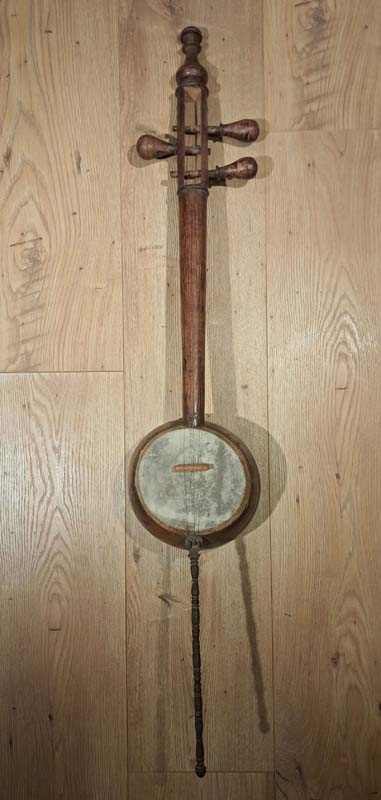
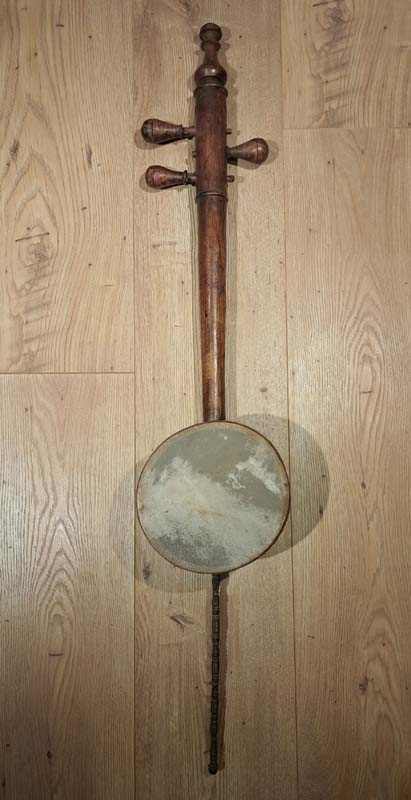
Kamancheh - Persian - 2.

Add to favorites
Added to Cart View Cart Checkout
Added to Wishlist View Wishlist
Removed from Wishlist
Information
Dimensions 915 × 160 × 90 mm
Name of musical instrument

Type of musical instrument

Typical place of occurrence

Date of manufature of instrument

Place of manufacture

Made by

Restored by

Scale

Number of strings

How to play musical instrument

Continent

Country

Sharing:
Categories:
Labels:

Kamancheh - Persian - 2.

Information
Dimensions 915 × 160 × 90 mm
Name of musical instrument

Type of musical instrument

Typical place of occurrence

Date of manufature of instrument

Place of manufacture

Made by

Restored by

Scale

Number of strings

How to play musical instrument

Continent

Country

Sharing:
Categories:
Labels:

The kamancheh (also kamānche or kamāncha) (Persian: کمانچه, Azerbaijani: kamança, Armenian: քամանչա, Kurdish: کەمانچە ,kemançe) is an Iranian bowed string instrument used in Persian, Azerbaijani, Armenian, Kurdish, Georgian, Turkmen, and Uzbek music with slight variations in the structure of the instrument. The kamancheh is related to the rebab which is the historical ancestor of the kamancheh and the bowed Byzantine lyra. The strings are played with a variable-tension bow.

In 2017, the art of crafting and playing with Kamancheh/Kamancha was included into the UNESCO Intangible Cultural Heritage Lists of Azerbaijan and Iran.

Name and etymology

The word “kamancheh” means “little bow” in Persian (kæman, bow, and -cheh, diminutive). The Turkish word kemençe is borrowed from Persian, with the pronunciation adapted to Turkish phonology. It also denotes a bowed string instrument, but the Turkish version differs significantly in structure and sound from the Persian kamancheh. There is also an instrument called kabak kemane literally “pumpkin-shaped bow instrument” used in Turkish music which is only slightly different from the Iranian kamancheh.

Structure

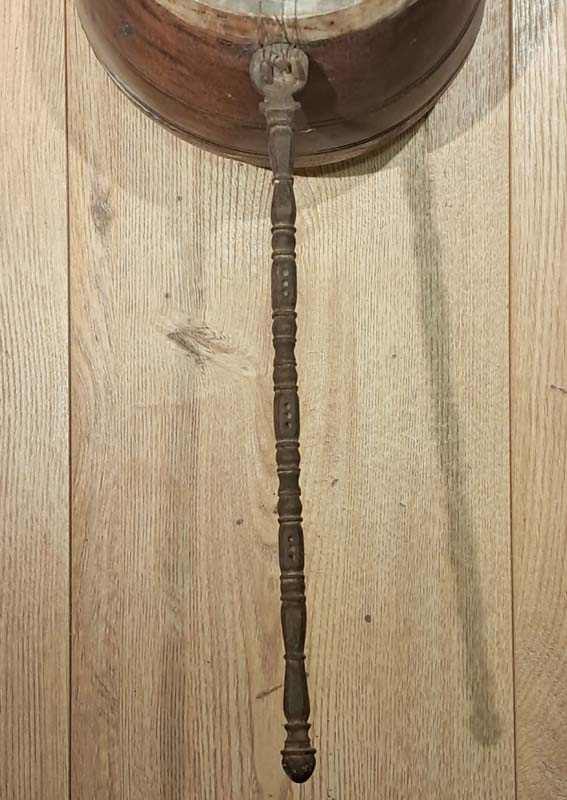
The kamancheh has a long neck including fingerboard which kamancheh maker shapes it as a truncated inverse cone for easy bow moving in down section, pegbox in both side of which four pegs are placed, and finial Traditionally kamanchehs had three silk strings, but modern instruments have four metal strings. Kamanchehs may have highly ornate inlays and elaborately carved ivory tuning pegs. The body has a long upper neck and a lower bowl-shaped resonating chamber made from a gourd or wood, usually covered with a membrane made from the skin of a lamb, goat or sometimes a fish, on which the bridge is set. From the bottom protrudes a spike to support the kamancheh while it is being played, hence in English, the instrument is sometimes called the spiked fiddle. It is played sitting down held like a cello though it is about the length of a viol. The end-pin can rest on the knee or thigh while the player is seated in a chair.

Kamancheh is usually tuned like an ordinary violin (G, D, A, E).

https://en.wikipedia.org/wiki/Kamancheh

no data

Reviews

There are no reviews yet.

Add a review

For security, use of CloudFlare's Turnstile service is required which is subject to the CloudFlare Privacy Policy and Terms of Use.

You might also be interested in this

Privacy Preferences
When you visit our website, it may store information through your browser from specific services, usually in form of cookies. Here you can change your privacy preferences. Please note that blocking some types of cookies may impact your experience on our website and the services we offer.