Skip to main content Scroll Top
Instruments from all over the world!

Kobza - Ukrainian

Add to favorites
Added to Cart View Cart Checkout
Added to Wishlist View Wishlist
Removed from Wishlist
Information
Dimensions 1005 × 378 × 93 mm
Name of musical instrument

Type of musical instrument

Typical place of occurrence

Date of manufature of instrument

Place of manufacture

Made by

Restored by

Scale

Number of strings

How to play musical instrument

Former owner

Géza Orczi (musician/instrument maker)

Continent

Country

Sharing:
Categories:
Labels:

Kobza - Ukrainian

Information
Dimensions 1005 × 378 × 93 mm
Name of musical instrument

Type of musical instrument

Typical place of occurrence

Date of manufature of instrument

Place of manufacture

Made by

Restored by

Scale

Number of strings

How to play musical instrument

Former owner

Géza Orczi (musician/instrument maker)

Continent

Country

Sharing:
Categories:
Labels:

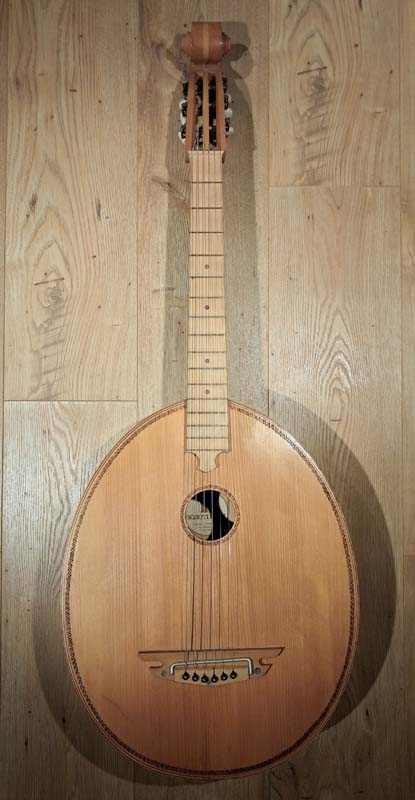
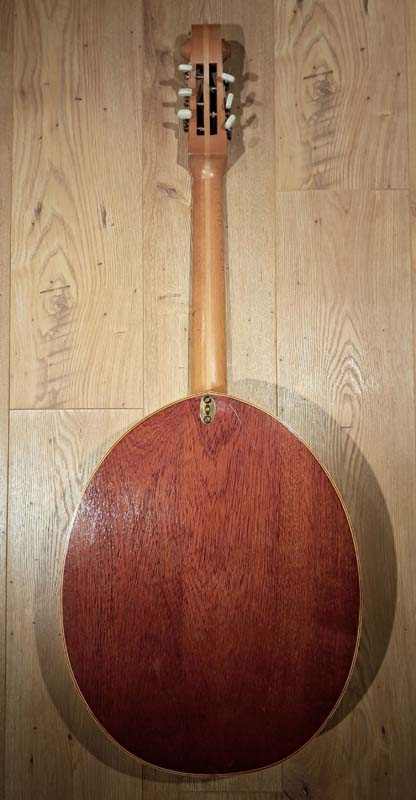
The kobza (Ukrainian: кобза), also called bandura (Ukrainian: бандура) is a Ukrainian folk music instrument of the lute family (Hornbostel-Sachs classification number 321.321-5+6), a relative of the Central European mandora. The term kobza however, has also been applied to a number of other Eastern European instruments distinct from the Ukrainian kobza.

Construction

The Ukrainian kobza was a traditionally gut-strung, lute-like stringed musical instrument with a body hewn from a single block of wood. Instruments with a staved assembly also exist. The kobza has a medium-length neck which may or may not have tied-on frets, which were usually made of gut. It was single-strung (sometimes also double-strung) and the strings were played with fingertips or occasionally with a plectrum threaded through a ring placed on the middle finger.

History

The term kobza is of Turkic origin and is related to the terms kobyz and komuz, thought to have been introduced into the Ukrainian language in the 13th century with the migration of a sizable group of Turkic people from Abkhazia settling in the Poltava region. It was usually played by a bard or minstrel known as a kobzar (occasionally in earlier times a kobeznik), who accompanies his recitation of epic poetry called duma in Ukrainian.

The Kobza acquired widespread popularity in the 16th century, with the advent of the Hetmanate (Cossack state). From the 17th century, the term bandura was often used as a synonym for the kobza. The term bandura has a Latin pedigree and reflects the growing contacts the Ukrainian people had with Western Europe, particularly in the courts of the Polish gentry. Ukrainian musicians that found employment at various German courts in the 18th century were called “pandoristen”. One of these musicians, Timofiy Bilohradsky, was a lute student of Sylvius Leopold Weiss and later became a noted lute virtuoso, a court lutenist, active in Königsberg and St. Petersburg.

In the 18th century, the kobza’s upper range was extended with an addition of several unstopped treble strings, known as “prystrunky”, meaning: strings on the side, in a psaltery-like set-up. In the early 20th century the kobza went into disuse. Currently there is a revival of authentic folk kobza playing in Ukraine, due to the efforts of the “Kobzar Guild” in Kyiv and Kharkiv. The kobza revival however, is impeded by the absence of museum specimens: with the exceptions of a unique surviving 17th-century kobza at the Muzeum Narodowe in Kraków and a 19th-century kobza, which has been refurbished as a bandura, at the Museum of Theater and Cinematography, in Kyiv; almost all evidence is entirely iconographic and some photos from the 19th century.

Etymology

The term kobza first appeared in Polish chronicles dating back to 1331 AD. In popular parlance the term Kobza was applied to any regional lute-like instrument used by court musicians in Central-Eastern Europe. The term was occasionally used for other musical instruments of several unrelated types. The term kobza was also used in historical sources and folk songs as a synonym of bandura in the 19th and early 20th century in Ukraine. The term was occasionally used for the bagpipes and occasionally for the hurdy-gurdy in Eastern Poland, Belarus and the Volyn region in Ukraine.

The unfretted “starosvitska” bandura (a variant of gusli), developed ca. 1700 appropriated the bandura name, but was commonly referred to as a kobza, because of the name’s historical cachet while the Romanian kobza or cobza is a different type of plucked lute.

The modern Ukrainian kobza

There are currently two different approaches to kobza construction: authentic fretless reconstructions, produced by adherents for the recreation of authentic folk traditions, and modern stylised fretted instruments based on a modified domra design. To date, there have been no attempts to reconstruct earlier fretted kobza of the 18th century.

The fretless kobza

The term kobza was often used as a synonym for bandura and the terms were used interchangeably until the mid-20th century. The use of the term kobza pre-dates the first known use of the term bandura.

Similarly, a “Kobzar” is a Ukrainian Folk singer and musician who may play the kobza, but who might also play other instruments instead, including the bandura. The internationally known kobzar Ostap Veresay (1803–1890), is today considered the foremost kobza player of the 19th century despite the fact that he referred to his instrument as a bandura.

He was a representative of the playing tradition stopping the strings along the neck but without frets. Veresay’s instrument had six single unstopped strings mounted along the treble side of the instrument and six stoppable strings strung along the neck. The strings strung along the neck and side are plucked by the right hand with the left hand stopping the strings on the fingerboard.

After O. Veresay’s death in 1890 the instrument fell into disuse until its revival in the 1980s by Mykola Budnyk and exemplified by such players as Volodymyr Kushpet, Taras Kompanichenko, Eduard Drach, and Jurij Fedynskyj.

The modern fretted kobza

The instruments are made today in prima (soprano), alto and tenor and contrabass sizes

A fretted version of the kobza was used by Paul Konoplenko-Zaporozhetz, who recorded a disc of kobza music for Folkways. Konoplenko first picked up the fretted kobza before the Revolution in 1917 in Kyiv from Vasyl’ Potapenko and played on this instrument after emigrating to Winnipeg, Manitoba, Canada. Konoplenko’s instrument had eight strings strung along the neck and four treble strings strung on the soundboard. The tuning used was reminiscent of the seven-string Russian guitar tuning (open G tuning).

Fretted kobzas were also developed by Mykola Prokopenko, who wrote a Ph.D. dissertation in 1976 on his efforts to reconstruct and resurrect the fretted Kobza. Prokopenko suggested that the four-stringed domra, an instrument widely taught in music schools in Ukraine but considered a Russian folk instrument but actually not used in Russia, be replaced by the fretted kobza. Although Prokopenko’s suggestion was not supported in 1976, it is currently being resurrected by musicians in Ukraine in the Academic folk instrument movement, particularly at the Kyiv Conservatory.

-Orchestral kobza, with four strings tuned in fifths using tunings that parallel those used by the instruments of the violin family. The instruments are made in prima (soprano), alto and tenor and contrabass sizes.

-Accompaniment kobza, usually having six or seven strings and a fretted neck. The six-string version uses standard guitar tuning. The seven-string version uses a Russian guitar (open G chord) tuning.

https://en.wikipedia.org/wiki/Kobza

Géza Orczi


Géza Orczi (Nagykáta, September 29, 1955 – April 8, 2021) Hungarian musician, percussionist and plucked-string instrumentalist, master instrument maker and restorer, founding member of Gandharvák, the group that created the Uplifting Classical genre, and Artisjus Award-winning performer.


Career

He began studying plucked string instruments at the age of nine. He was part of the pol-beat movement of the 1970s and 1980s. Later, his interests expanded to include percussion and wind instruments, as well as instrument making. In 1987, he passed the ORI exam in percussion and plucked string instruments, and in 1988, he also qualified as a bandleader. As a dancer, he became acquainted with the dance culture and folk music of the Balkan peoples, fields in which he has been continuously active. He was a permanent member and collaborator of ensembles and dance groups that play Balkan music and preserve traditions. He has participated in numerous productions as an accompanist for dance and theater performances. He is the recipient of several gold and platinum records.


His main instruments include the tapan, ud, saz, bouzouki, dzura, tambura, tamburica, and kaval.


As a master instrument maker and restorer, he specialized in traditional folk instruments.


Orchestral Activities

Orchestral Memberships

Kálmán Balogh, Besh o droM, Carmina Danubiana, Dilbere, Falkafolk, Gandharvák, Kolo, Kremenica, Makám, Rila, Szabotage, Sebő, Sirtos, Udrub, Vágtázó Csodaszarvas, Zora, Zsarátnok

Collaborations, Guest Appearances

Brathanki, Etnofon Music Association, Kaláka, Kálmánia, Korai öröm, Maskarades, Mydros, Pyrgos, Rece-Fice, Söndörgő, Vándor Vokál, Vizin


Performances

Plays

A Midsummer Night’s Dream (Besh o DroM, Szeged National Theater), Romeo and Juliet (Szabotage, Bárka Theater), The Lazy Tempefői (Sebő Band, Kőszeg Castle Theater), Dancing Hungarians, Pannon Fresco

Film music

Mátyás, the Prince Who Never Was (Sebő Band)

Festival Appearances

Mallorca World Folkdance 1997, 1999 – Grand Prize (Rila Ensemble), Womex, Sziget, Sopot, Volt, Kaláka, Misztrál, Magyarsziget, Philharmonic Tour with the Zsarátnok and Sebő Ensembles

Accompaniment for dance groups

Martenica, Tabán, Opanke, Jantra, Zdravec


Awards and recognitions

2004 “Honorary Bulgarian” certificate

2005 Artisjus Award (for promoting contemporary music)

2006 Bartók Commemorative Certificate


Discography

Balkandzsijszka Racsenica / Balkan Folk Music (as Géza Orczi) (Hungaroton, 1989)

Vándor Vokál: Polyphonic Folk Songs of Eastern Europe (Etnofon, 1995), The Moon Has Risen (Periferics, 2000), I Planted Roses (Belgium, Wildboar Music, 2002)

Zsarátnok: The Balkan Legends (New Tone Records, 1994)

Kálmán Balogh & The Gipsy Cimbalom Band: Gypsy Jazz (Rounder Select, 1999)

Rila: Bolgárkert (Fonó Budai Zeneház, 1999)

BesH o droM: Macsó Hímzés (Fonó, 2000) – gold record

Sebő Ensemble: Rejtelmek (Gryllus, 2001)

Makám: Anzix (FolkEuropa, 2003)

BesH o DroM: Don’t Point at Me (Asphalt Tango Records, 2003)

Ferenc Sebő: László Nagy (2004)

Ferenc Sebő: Attila József (2005)

Vágtázó Csodaszarvas: Pure Spring (2006) gold record

Vágtázó Csodaszarvas: Endless Asia! (Fonó Records, 2008) Gold Record

Carmina Danubiana: At the Foot of Buda Castle – The Hunyadis in Folklore (Csörsz Rumen István, 2008)

SzaboTage (Géza Orczi – Zoltán Szabó): Fairies and Witches (István Csörsz Rumen, 2009)

Vágtázó Csodaszarvas: Star Riding (2011) Early Joy Recycled 1998

Gandharvák: Uplifting Classical 1. (Gandharva Sound, 2012)

Ferenc Sebő: Weöres 100 (Gryllus, Hungarian Radio, 2013)

Gandharvák: Uplifting Classical 2. (Gandharva Sound, 2014)

Gandharvák: MAGIC (Gandharva Sound, 2016)

Additional albums were released in collaboration with the Brathanki, Zsarátnok (1994), Udrub (2004), Kálmán Balogh, and Vándor Vokál ensembles.


https://hu.wikipedia.org/wiki/Orczi_G%C3%A9za

Reviews

There are no reviews yet.

Add a review

For security, use of CloudFlare's Turnstile service is required which is subject to the CloudFlare Privacy Policy and Terms of Use.

You might also be interested in this

Privacy Preferences
When you visit our website, it may store information through your browser from specific services, usually in form of cookies. Here you can change your privacy preferences. Please note that blocking some types of cookies may impact your experience on our website and the services we offer.