Skip to main content Scroll Top
Instruments from all over the world!
  • Home
  • Gabon
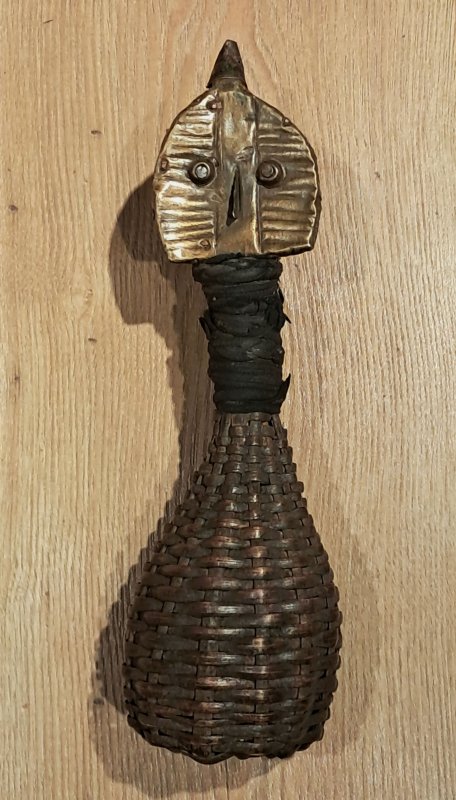
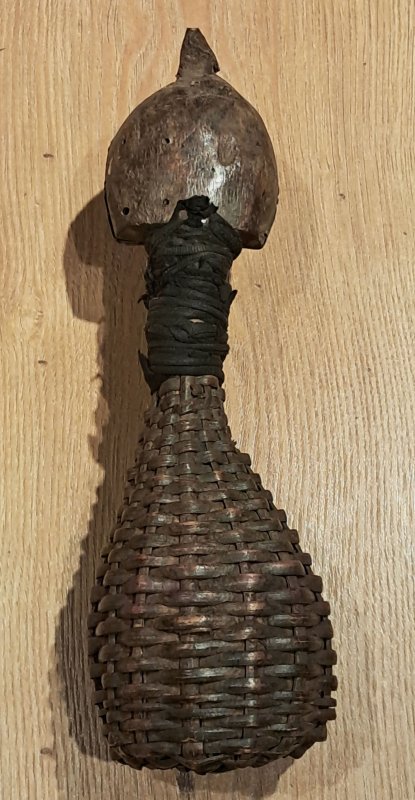
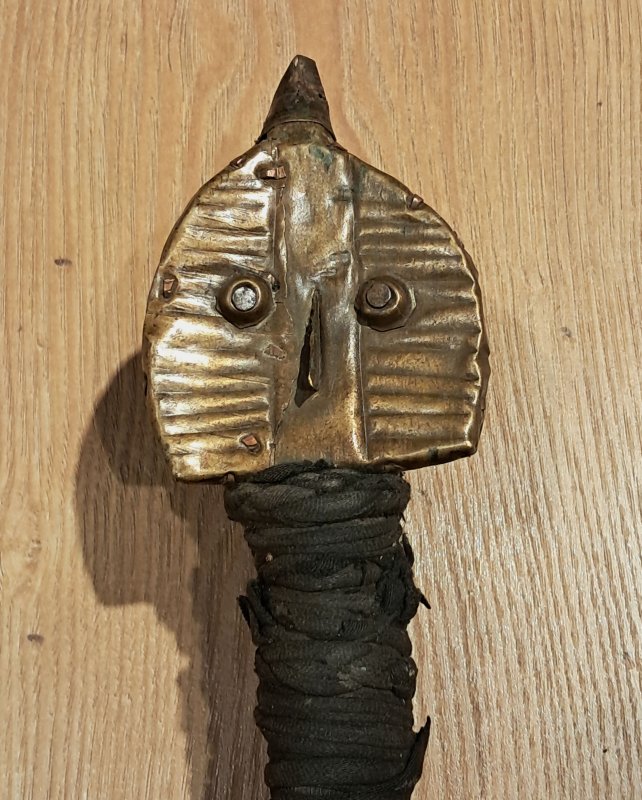
  • Rattle – antropomorphic – human shaped

Rattle - antropomorphic - human shaped

Add to favorites
Added to Cart View Cart Checkout
Added to Wishlist View Wishlist
Removed from Wishlist
Information
Dimensions 265 × 80 × 75 mm
Name of musical instrument

Type of musical instrument

Typical place of occurrence

Date of manufature of instrument

Place of manufacture

Made by

How to play musical instrument

Continent

Country

Sharing:
Categories:
Labels:

Rattle - antropomorphic - human shaped

Information
Dimensions 265 × 80 × 75 mm
Name of musical instrument

Type of musical instrument

Typical place of occurrence

Date of manufature of instrument

Place of manufacture

Made by

How to play musical instrument

Continent

Country

Sharing:
Categories:
Labels:

No data

Kota people

The Bakota (or Kota) are a Bantu ethnic group from the northeastern region of Gabon and Congo. The language they speak is called iKota, but is sometimes referred to as Bakota, ikuta, Kota, and among the Fang, they are known as Mekora. The language has several dialects, which include: Ndambomo, Mahongwe, Ikota-la-hua, Sake, Menzambi, Bougom. Some of these dialects themselves include regional variations of some kind.

Culture

The Kota are traditionally a patriarchal society, however some of the sub-groups such as the Mahongwe have over time adopted a matrilineal system of lineage (Mahongwe means, “from your father”). Another key feature of the Kota people is the originality of its circumcision and widow-purification rituals, which are generally kept secret.

The true meaning of Bakota is unclear, however it may be derived from the word kota, which means to bind/to attach/to link, hereby suggesting they view themselves as a united people bound by a common fate.

Most Kota people are Roman Catholic. The area of Gabon they live in is home of the Apostolic Vicariate of Makokou.

Population

Estimates indicate that there are at least 43,500 Kota speakers in the world, of whom 34,442 people (79%) live in the Ogouee-Ivindo province of northeastern Gabon, and 9055 people (21%) in neighboring Congo-Brazzaville. They make up the majority of the population of the regional capital city Makokou.

Politically, the Kota have been classified under the disputed “stateless societies” category. They have a strong egalitarian background, which in some instances cuts across age and gender lines. Kota children are taught to value tradition, respect for the elderly, and the concept of “Ewele” (loosely translated as ‘pride’).

Mbulu Ngulu Reliquary Figures

They are noted for their copper and brass reliquary guardian figures, which are part of a powerful religious and mystical order known as Bwete. However, it is unclear if these figures were made by the Kota people themselves, of other people living in the same area of Gabon. In the iKota language these figures are called mbulu ngulu. As the people of Gabon began to convert to Christianity in the 18th and 19th centuries, missionaries and colonial officials began to collect these figures. Today, most reliquary figures are found in museums in Europe and North America.

Influential Kota People

The Kota are not considered big players in Gabonese politics, however some Kota have been appointed to key positions in the Government. Alexandre Sambat, a long-time ambassador to the United States who later ran for president in 1993, was of Kota origin. Pascal Desire Misongo, another Kota, has served as minister of Justice in Gabon. Emmanuel Issoze-Ngondet was an established representative in the United Nations and served as Prime Minister of Gabon as well.

https://en.wikipedia.org/wiki/Kota_people_(Gabon)

Reviews

There are no reviews yet.

Add a review

For security, use of CloudFlare's Turnstile service is required which is subject to the CloudFlare Privacy Policy and Terms of Use.

Privacy Preferences
When you visit our website, it may store information through your browser from specific services, usually in form of cookies. Here you can change your privacy preferences. Please note that blocking some types of cookies may impact your experience on our website and the services we offer.