Skip to main content Scroll Top
Instruments from all over the world!
  • Home
  • America
  • USA
  • Psalterion – bowed – Ukelin – International Musical Corporation

Psalterion - bowed - Ukelin - International Musical Corporation

Add to favorites
Added to Cart View Cart Checkout
Added to Wishlist View Wishlist
Removed from Wishlist
Information
Dimensions 630 × 140 × 620 mm
Name of musical instrument

Type of musical instrument

Typical place of occurrence

Date of manufature of instrument

Place of manufacture

Made by

Restored by

Scale

Number of strings

How to play musical instrument

Continent

Country

Sharing:
Categories:

Psalterion - bowed - Ukelin - International Musical Corporation

Information
Dimensions 630 × 140 × 620 mm
Name of musical instrument

Type of musical instrument

Typical place of occurrence

Date of manufature of instrument

Place of manufacture

Made by

Restored by

Scale

Number of strings

How to play musical instrument

Continent

Country

Sharing:
Categories:

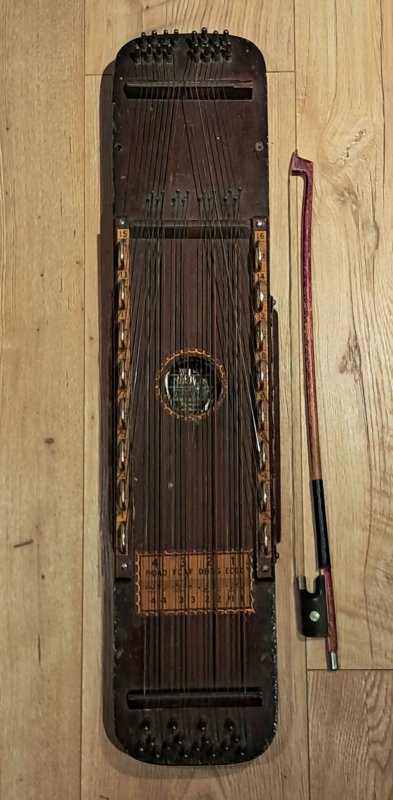
The ukelin is a stringed musical instrument made popular in the United States in the 1920s. It is a bowed psaltery with zither strings, and its name derives from the ukulele (which was first made in Portugal but was popularized in Hawaii) and the violin. It lost popularity prior to the 1970s because the instrument was difficult to play and often returned to the manufacturer before it was completely paid for.

History

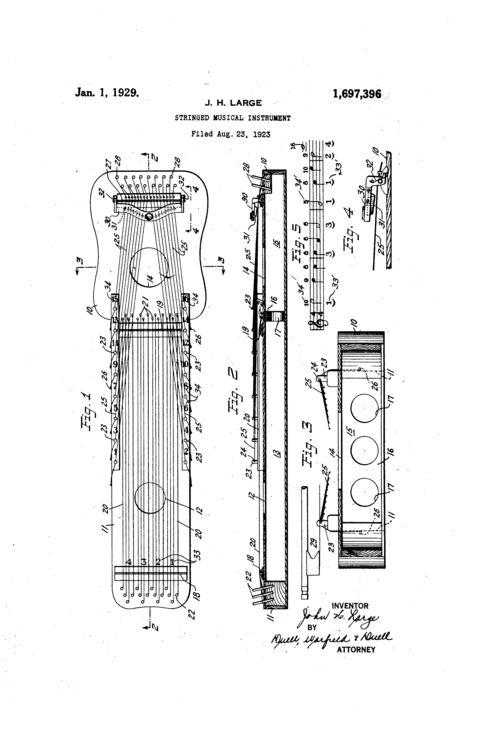
The history of the ukelin is hard to trace, since there were several instruments resembling the ukelin that were produced in the 1920s. Paul F. Richter filed the first known ukelin patent in December 1924; it was granted in April 1926. The Phonoharp Company, which merged with Oscar Schmidt, Inc. the same year, began producing ukelins in 1926. However, an instrument greatly resembling the ukelin had had its patent filed in 1923, a year before Richter filed his. Yet the patent, filed by John Large, was only granted after Richter’s patent had already been given. Another similar instrument had a patent filed by Walter Schmidt in 1925. Because of these patents filed one after the other, it is unclear who invented the first ukelin.

Violinist Henry Charles Marx was one of the first to sell what he called a violin-uke, among many other instruments he created to be manufactured by his company, Marxochime Colony. He was thought to be the first to manufacture the instrument but soon had his design copied by International Musical Corporation, which sold it under the name ukelin. The Phonoharp Company sold Richter’s design before merging with Oscar Schmidt in 1926. Marxochime and Oscar Schmidt International, Inc. sold their instruments door-to-door through traveling salesmen, often to poor rural families. The salesmen would purchase the instruments from the company and then sell them at an inflated price, often on a payment plan. These prices increased as the economy grew stronger after the Depression. The customers were sometimes told that they were buying the instrument at a reduced price compared to a music store, but there is no evidence that they were sold in music stores. The instruments were usually sold for $35-$40.

Playing

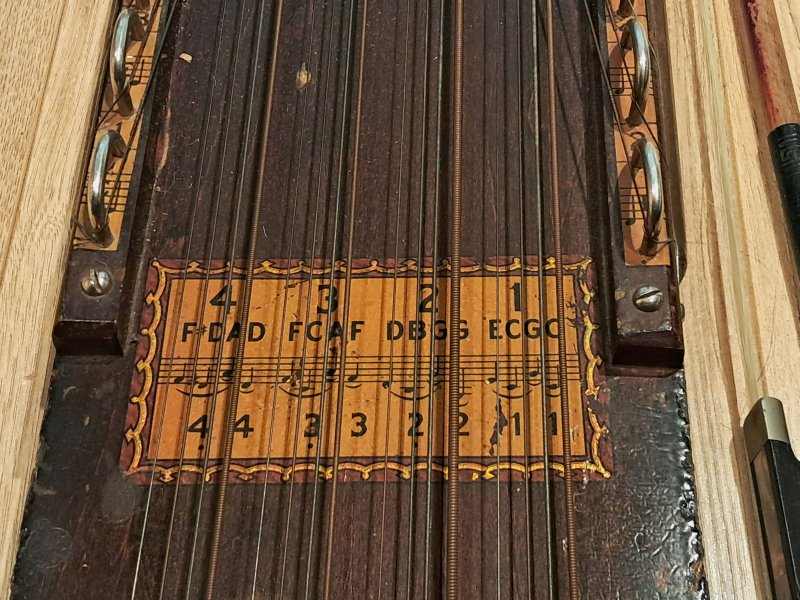
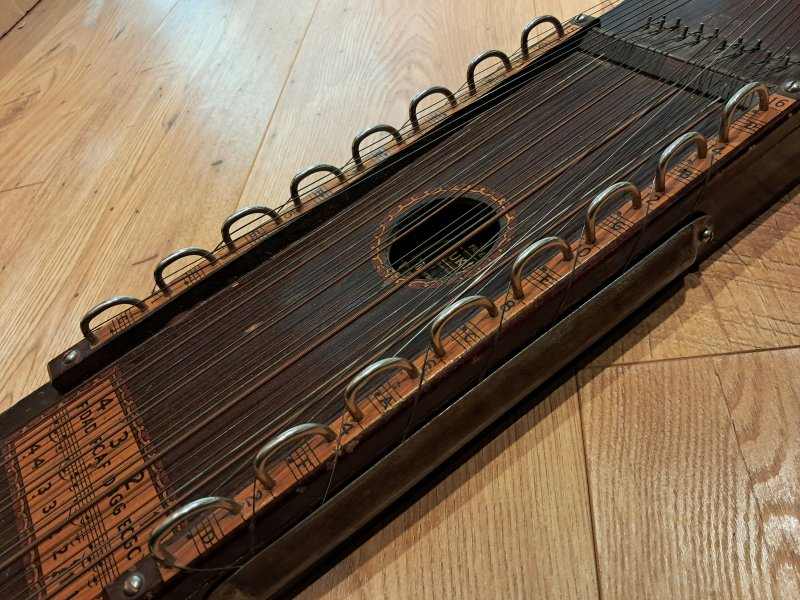
The ukelin has sixteen melody and sixteen bass strings, divided into four groups for playing accompanying chords. Each group has one large bass string and three smaller chord strings. The ukelin is placed on the table in front of the player. The melody strings are played with a bow in the right hand, and the bass strings are plucked or strummed with the left hand’s fingernails or a pick. The ukelin is tuned to a C major scale and, unless tuned to include them, is unable to play chromatic notes; therefore, it is limited in what it can play. For ease of playing for amateurs, the strings are given numbers, and the booklets that were sold with the ukelin would give these numbers a tabulature notation, instead of notes on a staff, for playing simple songs.

Decline

Ukelins were sold to people who thought that the instrument was easy to play, but this was not the case. They were also quite limited as to what they could play because they were designed as diatonic instruments. As a result, many instruments were returned to the manufacturers, who ended up with piles of instruments that they couldn’t sell. Salesmen misrepresented the instruments to customers, who felt as if they had been tricked into buying a worthless instrument. Oscar Schmidt, Inc. stopped producing the ukelin in 1964 after the new owner, Glen Peterson, discovered the shady business practices of some of his salesmen. Between instrument returns and a declining interest in musical instruments due to the advent of television as a form of family entertainment, Marxochime could no longer produce the violin-uke and halted production in 1972.

https://en.wikipedia.org/wiki/Ukelin

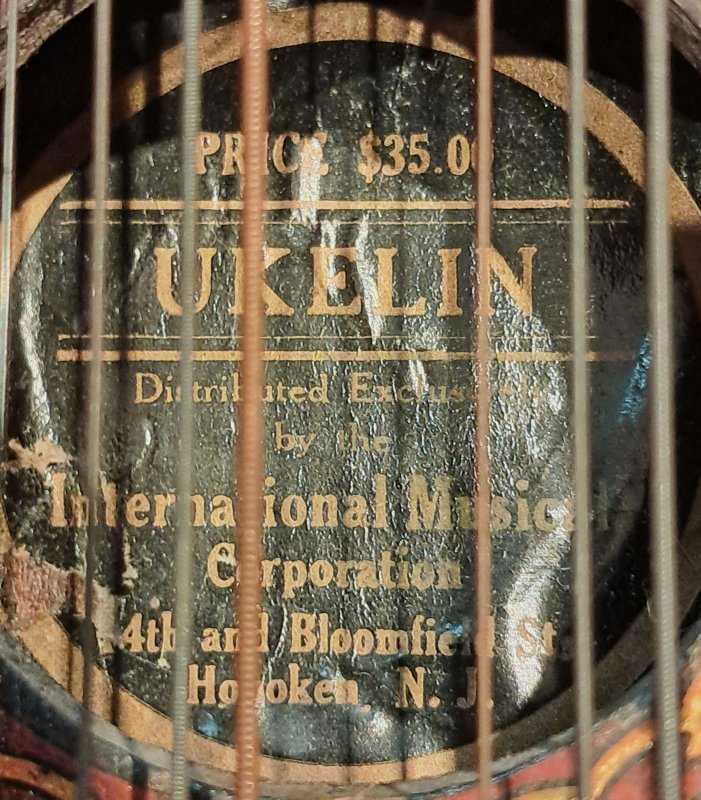
INTERNATIONAM MUSICAL CORPORATION

International Musical Corporation of Hoboken, NJ. IMC was apparently only afloat for a few years in the 1920s before being absorbed by Oscar Schmidt around 1930. The fretless zither manufacturing company name that resulted was the well-known Oscar Schmidt-International. This was one of several company names under which Oscar Schmidt produced fretless zithers.

https://commons.wikimedia.org/wiki/Category:International_Musical_Corporation,_Hoboken,_New_Jersey

Source of image of patent:

https://commons.wikimedia.org/wiki/Category:International_Musical_Corporation,_Hoboken,_New_Jersey#/media/File:US_patent_1697396_(1929-01-01,_filed_in_1923-08-23)_John_H._Large_(Internat_Musical_Corp),_Stringed_Musical_Instruments_-_Fig._1.png

Reviews

There are no reviews yet.

Add a review

For security, use of CloudFlare's Turnstile service is required which is subject to the CloudFlare Privacy Policy and Terms of Use.

Privacy Preferences
When you visit our website, it may store information through your browser from specific services, usually in form of cookies. Here you can change your privacy preferences. Please note that blocking some types of cookies may impact your experience on our website and the services we offer.