Skip to main content Scroll Top
Instruments from all over the world!
  • Home
  • Europe
  • Hungary
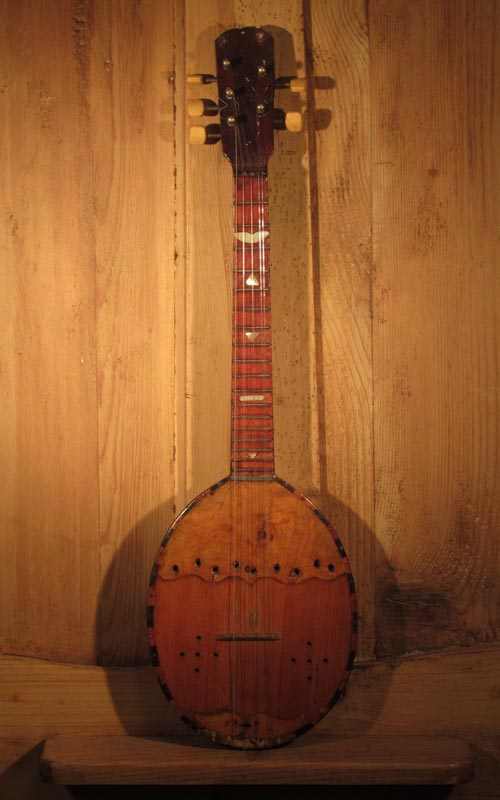
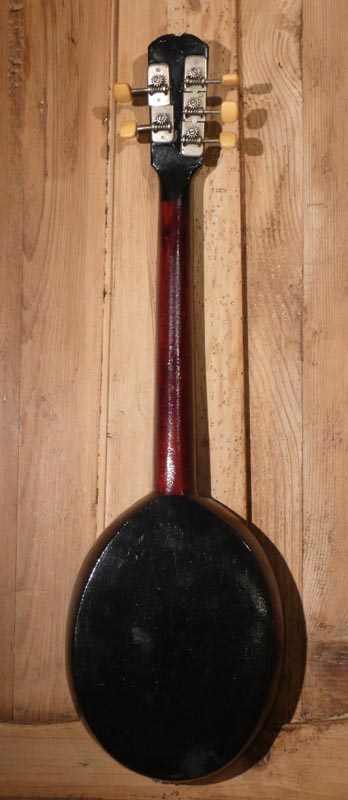
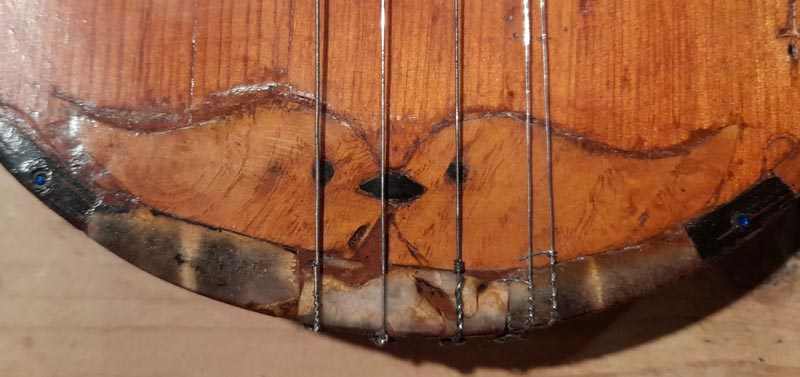
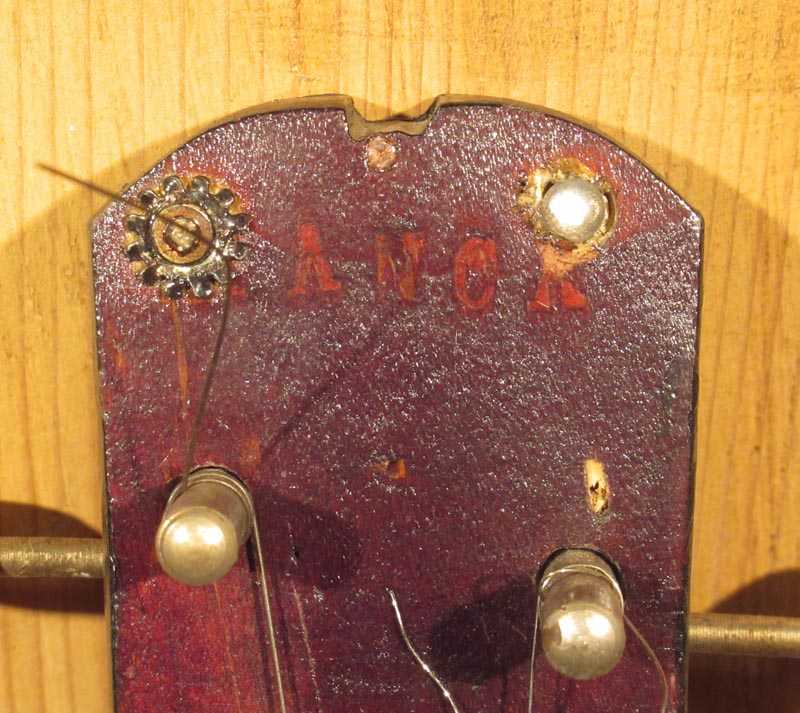
  • Tambura – prime tambura – Lajos Ranga – Rákospalota – Budapest 1.

Tambura - prime tambura - Lajos Ranga - Rákospalota - Budapest 1.

Add to favorites
Added to Cart View Cart Checkout
Added to Wishlist View Wishlist
Removed from Wishlist
Information
Dimensions 585 × 173 × 35 mm
Name of musical instrument

Type of musical instrument

Typical place of occurrence

, ,

Date of manufature of instrument

Place of manufacture

Made by

Restored by

Scale

Number of strings

How to play musical instrument

Continent

Country

Sharing:
Categories:

Tambura - prime tambura - Lajos Ranga - Rákospalota - Budapest 1.

Information
Dimensions 585 × 173 × 35 mm
Name of musical instrument

Type of musical instrument

Typical place of occurrence

, ,

Date of manufature of instrument

Place of manufacture

Made by

Restored by

Scale

Number of strings

How to play musical instrument

Continent

Country

Sharing:
Categories:

The tambura is a plucked instrument of the long-necked lute family. Tambura-type instruments are known in many countries of the world, in different but similar variations in construction and use – from China to the Adriatic, from Russia to North Africa. In Europe, it is mostly used as a folk instrument by Hungarians, Croats and Serbs. The Central and Southern European tambouras in use today were developed in Hungary in the late 19th century by instrument makers in Budapest.

The word tambura probably comes from the Persian word “tn”, meaning string. Over the centuries, various instruments have been called by this name, and in the 17th century Comenius wrote: “The tambura consists of strings wound with string winding pins.” And in the 18th century it was described as “a snail shell made into a tombora.” The name ‘tombora’ was first recorded in Hungary by Antal Balla in his study ‘The Sound’ between 1744 and 1809. 

Several names are in use in Hungary. In the Great Alföld it is called citera or tökcitura (Szeged), in Kecskemét it is also called nótafa. In the Danube-Tisza area, it is also known as citera, but it is mostly the larger version of the latter. The most common form, however, is the pear-shaped body covered with a wall in front, from which the thin and relatively short neck emerges. In response to the needs of the orchestra, the members of the family of instruments that developed in the 19th century took their names from those of the stringed band and the brass band: ‘contra’, ‘viola’, ‘cello’, ‘bass prime’, ‘prime’. The instrument is made up of three main parts, the shape and size of which may vary from one type of tambourine to another: head, neck, body (corpus), which consists of two main parts, the cover and the belly.

History

Its ancestor is the Indian long-necked lute, the tamburi, also known as tanpur, and its East Turkestan variant. The instrument was known in ancient Mesopotamia, and from there it was brought to Egypt. Later, it can be found in the art of Thebes, and later in the ancient Greeks and Romans.

In the 10th century, the Arabic al-Farabi already reports on the different versions of the tambura and the dimensions of the Baghdad tambura. In Europe, the first written record of the tamboura is found in a document written in 1551 by N. Nicholas, the French consul in Turkey, who recorded an interesting solo instrument in Bosnia, which was a favourite instrument of the Bosnian Janissaries, and because it was used as a solo instrument, it became known as the samica. It reached the continent through two routes, via Arab culture:

-one through southern Italy and Sicily to Spain: the guitar in Spain and the mandolin in Italy;

-the other led through the Balkans to south-eastern Europe: the pandura in Bulgaria, the bandura in Ukraine, and the balalaika and domra in Russia;

In Central Europe, a Persian-Arabic version of the instrument spread, which was probably transmitted by the Turks first to Southern Europe in the 16th and 17th centuries, and later from there to Hungary with the rising population. Until the 19th century, it was used alone as an instrument to accompany singing (tambura samica), and it was not until the second half of the century that tambura orchestras appeared in the Great Alföld of present-day Hungary, in Slavonia and in Vojvodina. Its heyday was in the 19th and 20th centuries. Today it has declined in Hungary: it is mainly used by Croats and Serbs from Vojvodina, but there are also Hungarian tambura bands.

It is still used in various versions in many countries of the world. In Persia and Turkestan it is known as the tambur, in Armenia and the Caucasus as tanpur or tambur, and has been modified into a stringed instrument. Tambura-like instruments are found among the Uyghurs, such as the tambur, the koboz and the dutar, among the Mongols the sansian, among the Kazakhs the dombra and among the Tajiks the dombrata and the dumbrak. The European guitar, the mandolin, the buzuki, the Macedonian and the Bulgarian tambura also evolved from these Central Asian varieties.

Coverage area

Tambura orchestras were often made up of gypsy musicians who played the repertoire of up to three or four different nations (Hungarian, Croatian, Serbian, Swabian). In its area of spread, the tambura orchestra had the same status as the gypsy orchestra. It was also used at weddings, city festivals and in taverns. In Europe today, it is a national instrument, mainly used by Croats, and is known and used everywhere, but it is most widely used in Slavonia. In Hungary, it has almost completely disappeared from public consciousness, although it is still used in a few villages (e.g. Dávod, Báta, Bátmonostor, Mohács) and sometimes in dance halls. In Vojvodina, there is a revival of the tambura tradition, both on the Hungarian and the Serbian side.

Central Europe

The distribution area of the Central European tambura.

-Croatia, mostly Slavonia (Croats, Hungarians)

-Bosnia and Herzegovina (Croats)

-Hungary (Croats, Socacians, Bosniaks from Baranya, Bunyevans, Hungarians, Serbs, Gypsies)

-Vojvodina part of Serbia (Croats, Serbs, Hungarians, Ruthenians, Gypsies, Romanians)

-The Burgenland part of Austria (Croats)

In Vojvodina, the tambura players of Petterréve, Moholi, Csantavér, Novi Sad, Becskerek, Nagykikinda and Subotica are recognised. In Croatia, among Hungarians, the instrument is mainly used in the region of Kórógy and Szentlászló, but it is also mostly used among Croats in this region (Slavonia).

Hungary

In Hungary, it was mostly used in the Great Alföld and on its borders, and is still used in some places, and until the First World War, several bands played in Budapest, Vienna (1 Hungarian, 1 Croatian and 1 Serbian band) and Bratislava. However, the tambura has played little part in folk music research, so in many places its tradition has died out without being the subject of thorough research or any research at all. Such regions include Somogy, the Zala hills and Mezőföld, from which little sound material has survived. For the same reason, there is no significant literature on Hungarian tambura music in Hungary.

The Hungarian tambura dialects can be divided into 7-8 units, these are:

-Bácskai Dunamente

-Sárközi

sárpilisi

-Kalocsai

-Somogyi, Zalai (completely extinct)

-Vojvodina (Tisza lowland)

-Slavonia

not a separate dialect, but also found among Gypsies in Satu Mare.

Famous are the tambura players of Baja, Dávod, Bátmonstor, Bogyiszló, Mohács, Pécs, Sükösd, Báty, but also the Croatian tambura players of Kalocsa, Baranya and the Serb tambura players of Szentendre.

The Baja tambura orchestra also performed at the 1896 Budapest Millennium World Exhibition. According to oral tradition, Queen Elisabeth and King Franz Joseph I gave them a 20 crown gold piece each as a token of their appreciation.

It is also a little known fact that in 1906, at the reburial of Ferenc Rákóczi II, tambua players (also the Baja tambura players) played in the funeral procession.

https://hu.wikipedia.org/wiki/Tambura

Lajos Ranga was born on 02.09.1874 in Szekszárd in a Calvinist farming family. He married on 05.12.1899 in the then district VI (now XIII), at that time he was a musician. The Museum of Music History has a violin from 1910 and a six-string classical guitar from 1935, so we know for sure that he lived at 31 Istvántelki út between 1910 and 1935,

In the 1931 edition of the Directory of Commerce, Industry and Agriculture of Hungary he was already listed as a carpenter. It is possible that the Global Economic Crises reduced the demand for musical instruments (when people are starving, they don’t order new violins, guitars and tambouras) so much that he was forced to switch to cabinetmaking.

It is conceivable that he played music in a restaurant all the time and even if he only had a supplementary activity, making musical instruments, and that is why there are no more news, advertisements, etc. However, the use of the term ‘master instrument maker’ contradicts this line of thought, and a master instrument maker can still make a living from his work and does not need a supplementary activity.

What happened to him after 1935 is equally mysterious. He died in Ipolyság in 1944.

https://rakospalotaanno.hu/2020/07/07/az-ismeretlen-ranga-lajos-hangszerkeszito/

Reviews

There are no reviews yet.

Add a review

For security, use of CloudFlare's Turnstile service is required which is subject to the CloudFlare Privacy Policy and Terms of Use.

You might also be interested in this

Privacy Preferences
When you visit our website, it may store information through your browser from specific services, usually in form of cookies. Here you can change your privacy preferences. Please note that blocking some types of cookies may impact your experience on our website and the services we offer.