Skip to main content Scroll Top
Instruments from all over the world!
  • Home
  • Europe
  • Hungary
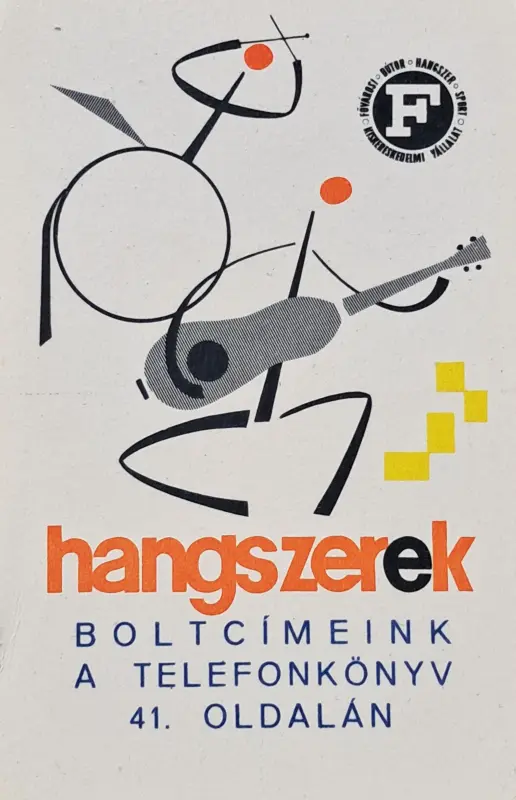
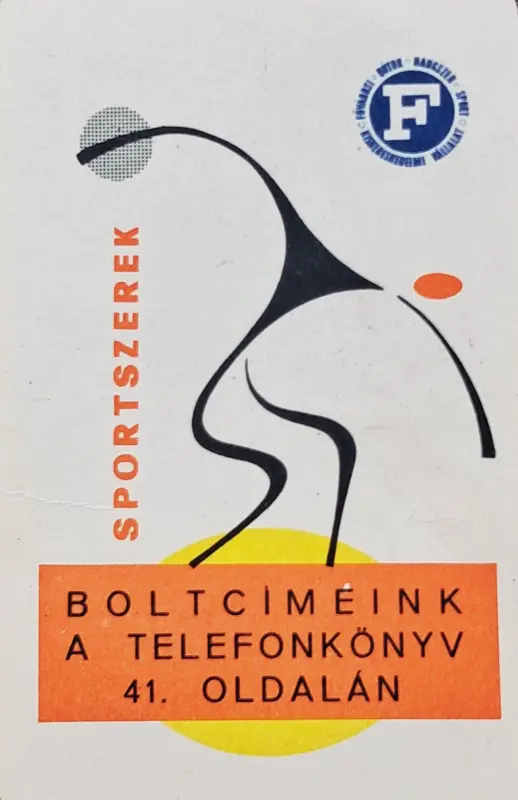
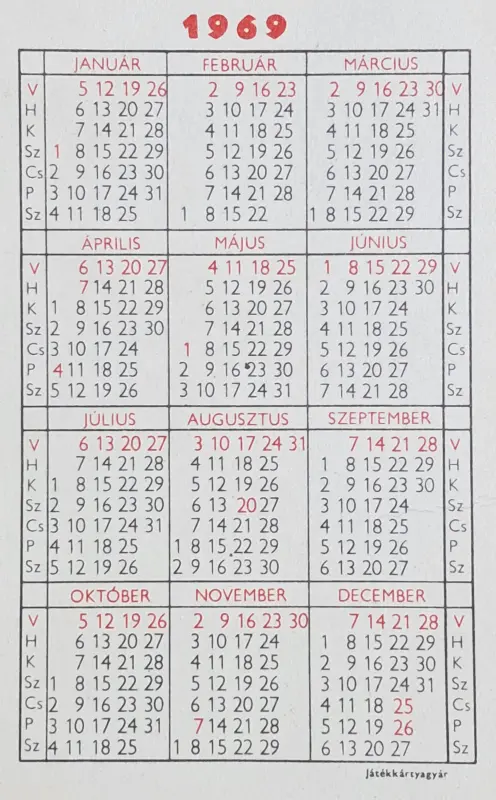
  • Calendar – Metropolitan Furniture, Musical Instrument and Toy Retail Trade Company – 2 pieces

Calendar - Metropolitan Furniture, Musical Instrument and Toy Retail Trade Company – 2 pieces

Add to favorites
Added to Cart View Cart Checkout
Added to Wishlist View Wishlist
Removed from Wishlist
Information:
Author and Title

Published by

Place of Edition

Year of Edition

Number of pages

2

Language

Hungarian

Size (length x width – mm)

104 × 67

Within other caregory

Paper collectible

Sharing:
Categories:
Labels:

Calendar - Metropolitan Furniture, Musical Instrument and Toy Retail Trade Company – 2 pieces

Add to favorites
Added to Cart View Cart Checkout
Added to Wishlist View Wishlist
Removed from Wishlist
Information:
Author and Title

Published by

Place of Edition

Year of Edition

Number of pages

2

Language

Hungarian

Size (length x width – mm)

104 × 67

Within other caregory

Paper collectible

Sharing:
Labels:
Categories:


FŐBUHA

Address: Budapest, V. Deák Ferenc utca 17.


The predecessor of the Triál Sport-, Musical Instrument and Toy Wholesale Company was the FŐBUHA (Fővárosi Bútor Hangszer és Sportszer Kiskereskedelmi Vállalat = Metropolitan Furniture, Musical Instrument and Toy Retail Trade Company), which was split off in 1967, from then on it used a new logo.

https://bu.hu.museum-digital.org/object/679273


In 1968, the building at 17 Deák Ferenc Street in the V. district became the headquarters of the FŐBUHA.

https://hu.museum-digital.org/object/795673?navlang=hu


FŐBUHA was a company controlled by the Metropolitan Council. In 1978 it was dissolved by successors. Its activities were taken over by other companies from 1st January, 1979.

Under its name, it sold furniture, musical instruments, sports equipment, toys and souvenirs. The word had already caused widespread consternation among customers during the company’s existence. It is not surprising that the title of the Népszava report on the closure included the word ‘buhátlanság’, a humorous reference to ‘ruhátlanság = lack of clothes’.

In the 1950s, the commercial enterprises managed by the Metropolitan Council were still organised on a territorial basis, district by district. Several of these were merged to increase efficiency: the public utilities were reorganised in 1971 and the catering companies in 1967. At the same time, the reorganisation of the retail trade in industrial goods required more organisational effort, as they were separated by profession rather than by territory. The reorganisation – and consequent closure – of FŐBUHA did not take place until 1978.

https://antikva.hu/gazdasagtortenet/fobuha-fovarosi-butor-hangszer-sportszer-kiskereskedelmi-v


FŐBUHA commercial:

https://www.youtube.com/watch?v=eQqlBxxAMvs


Playing Card Factory and Printing House

1950–1974

Budapest, 17 Rottenbiller Street, District VII.

After war damage was repaired, the Piatnik Card Factory operated under state supervision starting in 1946, but as a foreign-owned enterprise, it was spared nationalization. In 1949, however, nationalization did take place. After the owners were compensated, the successor to Piatnik Kft.—the National Playing Card Factory and Printing House—was established by a charter issued by the Ministry of Light Industry, No. 12.105/1950, dated June 22. (Commercial Registry: 10,649/1950; July 4.) Its headquarters remained on Rottenbiller Street, and several smaller printing plants were incorporated into it, such as the Albert Bakács and Son Printing Plant and Emil Seidner’s Poster and Label Printing Plant. The number of employees was 180 in 1950 and 190 in 1956.


Directors:

1948–1952 – György Földes, Mihály Török, Gábor Bencze

1953–1956 – Mihály Mészáros

1956–1974 – Ferenc Koltai


The company’s early years were marked by postwar recovery. The renewal of the machinery began in 1959, when, under an agreement with the Hamburg-based company Friedrich Lubienski, the company was able to purchase new machines in exchange for playing cards. Among other things, they acquired a Neuburger printing press, single- and double-sided calenders, a Krause smoothing and sizing machine, manually fed cutting machines, and varnishing equipment. In 1964, they purchased a four-color Planéta press from the GDR and a roll-gluing machine from Lubienski. In 1971, they automated the packaging process.


Based on designs by graphic artist József Kornély, the company revamped its playing card collection and targeted Western European markets. They were so successful in this endeavor that by the 1960s, they were exporting their products to thirty countries on four continents. Overseas distribution was handled through a foreign trade company operating under the name ARTEX.


Card production figures from 1950 to 1970:

1952: 42,000 dozen

1957: 52,000 dozen

1958: 85,000 dozen

1959: 135,000 dozen

1960: 220,000 dozen

1970: 800,000 dozen


The product range gradually expanded and evolved: in addition to playing cards, the factory produced posters, commercial printed materials, labels, stickers, board games, postcards, and covered boxes. Starting around 1953, the cardstock was supplied by the Diósgyőr Paper Mill; prior to that, the sheets were glued together at the Playing Card Factory. Production of once-important products, such as stickers and boxes, ceased in the 1970s. The Playing Card Factory and Printing House merged with the Offset Printing House in 1974.


https://www.kartya-jatek.hu/jatekkartyagyar_es_nyomda/

September 1918: For the fall season, all types of musical instruments and parts can be purchased at the lowest prices exclusively at M. Geiger’s musical instrument wholesale store. 9 Korall Street, Budapest V. The only company in the country that works exclusively with resellers. Sales to merchants only. Request a price list. (Magyar Kereskedők Lapja – September 14, 1918 – Arcanum database)


September 1923: Boys who have graduated from high school are being accepted as apprentices for INSTRUMENT MAKING. Geiger Musical Instrument Wholesale, 37 Nagymező Street. (Pesti Hírlap – September 7, 1923 – Arcanum database)


December 1923: RUNNING BOYS. 13–15-year-olds hired immediately. Geiger Musical Instrument Wholesale, 37 Nagymező Street. (Friss Újság – December 28, 1923 – Arcanum database)


November 1940: The best source for fencing equipment, ski gear, backpacks, expanders, and all sporting goods, musical instruments, strings, and accessories: Geiger M-né Musical Instrument, Sporting Goods, and Toy Wholesale, Budapest V., 9 Károly Légrády Street (OMKE – November 30, 1940 – Arcanum database)


January 1944: The best source for water bottles, hiking boxes, backpacks, winter and spring sporting goods, musical instruments, and toys: Geiger M-né Musical Instrument, Sporting Goods, and Toy Wholesale, Budapest V., 9 Károly Légrády Street (Magyar Vaskereskedő – January 22, 1944 – Arcanum database)


Korall Street and Károly Légrády Street were the same public thoroughfare; Balzac Street in today’s 13th District of Budapest (Újlipótváros) was known by these names at various times throughout history.

You might also be interested in this

Privacy Preferences
When you visit our website, it may store information through your browser from specific services, usually in form of cookies. Here you can change your privacy preferences. Please note that blocking some types of cookies may impact your experience on our website and the services we offer.