Skip to main content Scroll Top
Instruments from all over the world!

Sueng

Add to favorites
Added to Cart View Cart Checkout
Added to Wishlist View Wishlist
Removed from Wishlist
Information
Dimensions 860 × 255 × 33 mm
Name of musical instrument

Type of musical instrument

Typical place of occurrence

Date of manufature of instrument

Place of manufacture

Made by

Restored by

Scale

Number of strings

How to play musical instrument

Continent

Country

Sharing:
Categories:
Labels:

Sueng

Information
Dimensions 860 × 255 × 33 mm
Name of musical instrument

Type of musical instrument

Typical place of occurrence

Date of manufature of instrument

Place of manufacture

Made by

Restored by

Scale

Number of strings

How to play musical instrument

Continent

Country

Sharing:
Categories:
Labels:

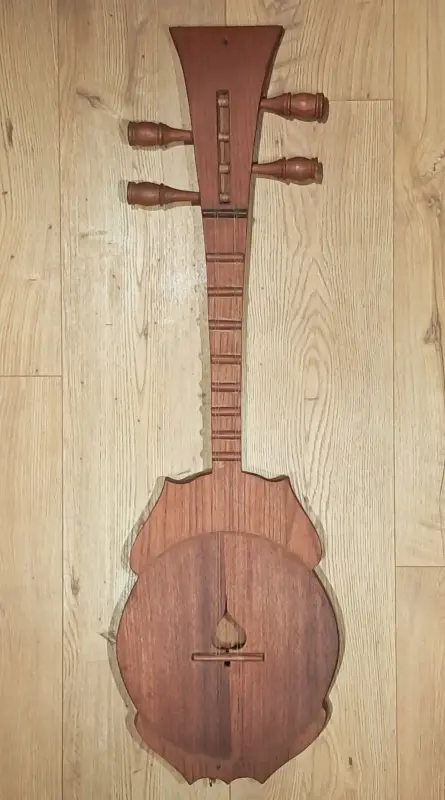
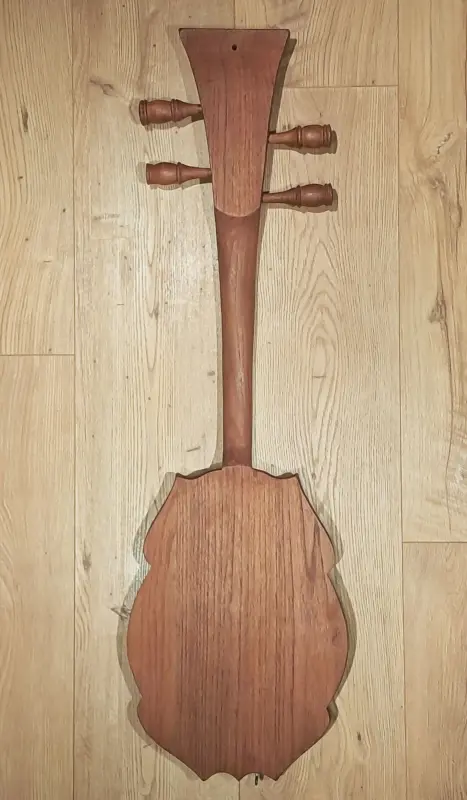
The sueng (Thai: ซึง, Burmese: ၄ကြိုးထပ်ပို (ဆီုင်), pronounced [sɯ̄ŋ], also spelled seung or süng) is a plucked fretted lute from the northern (Lanna) region of Thailand. The instrument is made from hardwood and its strings (numbering either four or six and arranged in courses of two) are most often made of steel wire. It has nine bamboo frets.

The sueng is part of a northern Thai traditional ensemble called the salo-so (saw)-sueng ensemble, along with the salo (3-string spike fiddle) and pi so (free reed pipe).

The sueng is similar to the grajabpi (กระจับปี่), an ancient Thai instrument that is used in the classical music of central Thailand.


Construction

Most suengs are made from a single piece of Jackfruit wood, carved into shape by the artisan. Once carved, a round sound board of the same wood is glued to the instrument. Trapezoid shaped sticks are cut form a bamboo stem and installed as frets. The tuning pegs are then installed: this pegs only have an aesthetic function nowadays, as many modern suengs rely on guitar machine heads for tuning. Eventually the instrument is painted and sometimes decorated with Lai Thai motifs. The bridge can be made from either bone or hardwood. Other woods used for the construction of the sueng are Rosewood and Teak.


Sound

The frets on the sueng are spaced differently than western fretted instruments. In fact, with such arrangement of frets, the instrument plays in the 7-TET temperament, meaning that in one octave the instrument plays seven tones, as opposed to the twelve tones of western music. This temperament is found in traditional Thai music and in other instruments like Ranat.

The playing technique resembles that of the oud where the two strings in the course are tuned to unison and played together as one, with a long soft pick most often made of plastic.

https://en.wikipedia.org/wiki/Sueng

No data

Reviews

There are no reviews yet.

Add a review

For security, use of CloudFlare's Turnstile service is required which is subject to the CloudFlare Privacy Policy and Terms of Use.

You might also be interested in this

Privacy Preferences
When you visit our website, it may store information through your browser from specific services, usually in form of cookies. Here you can change your privacy preferences. Please note that blocking some types of cookies may impact your experience on our website and the services we offer.