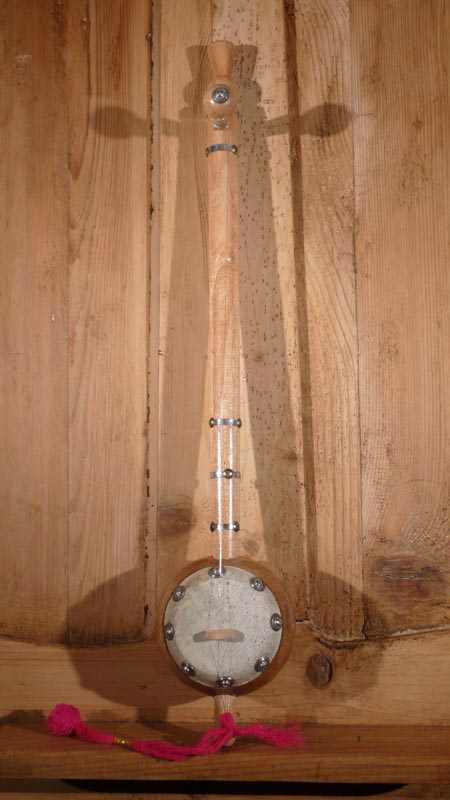
Ektara
Add to favorites
Information
| Dimensions | 530 × 98 × 70 mm |
|---|---|
| Name of musical instrument | |
| Type of musical instrument | |
| Typical place of occurrence | |
| Date of manufature of instrument | |
| Place of manufacture | |
| Made by | |
| Restored by | |
| Scale | |
| Number of strings | |
| How to play musical instrument | |
| Former owner | András Bartha |
| Continent | |
| Country |
Categories: India
Ektara
Information
| Dimensions | 530 × 98 × 70 mm |
|---|---|
| Name of musical instrument | |
| Type of musical instrument | |
| Typical place of occurrence | |
| Date of manufature of instrument | |
| Place of manufacture | |
| Made by | |
| Restored by | |
| Scale | |
| Number of strings | |
| How to play musical instrument | |
| Former owner | András Bartha |
| Continent | |
| Country |
Categories: India
Description of instrument type
About the instrument maker
Ratings
Description of instrument type
The three different instruments used in modern India, which are not necessarily related, are all called the Ektara. One form resembles the lute. To make this version, a bamboo stick is pierced through the side of a wooden bowl (called a ‘tumbo’) and the top of the bowl is covered with deerskin. The instrument has a single string that runs from a pin at the top, down the length of the stick neck, through a bridge in the soundboard of the deerskin, and is tied at the “spike” where the stick pierces the bowl.
About the instrument maker
no data
Ratings
Add a review Cancel reply
You might also be interested in this
Clear Filters

Reviews
There are no reviews yet.