Crwth - N.K.
| Dimensions | 500 × 235 × 60 mm |
|---|---|
| Name of musical instrument | |
| Type of musical instrument | |
| Typical place of occurrence | |
| Date of manufature of instrument | |
| Place of manufacture | |
| Made by | |
| Restored by | |
| Scale | |
| Number of strings | |
| How to play musical instrument | |
| Continent | |
| Country |
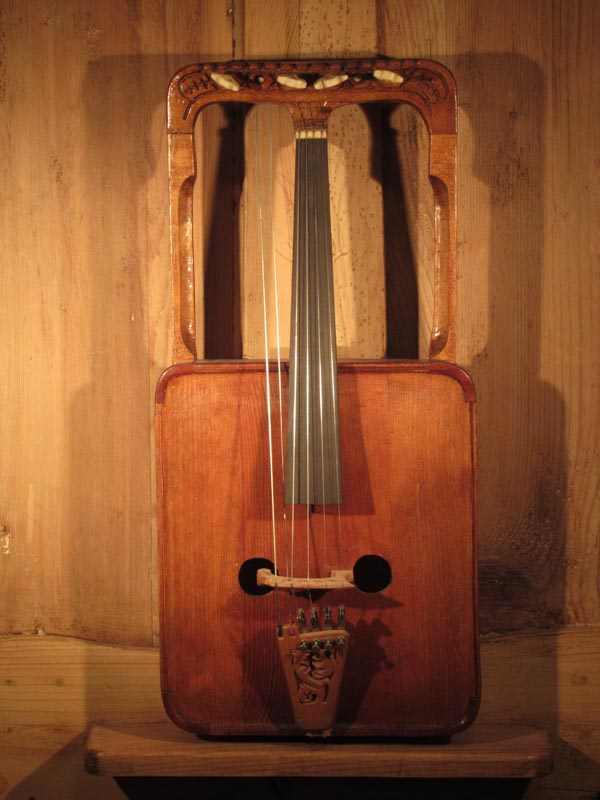
The crwth (pronounced: [kruːθ] or [krʊθ]) or krotta is an ancient stringed instrument of Celtic origin from Wales.
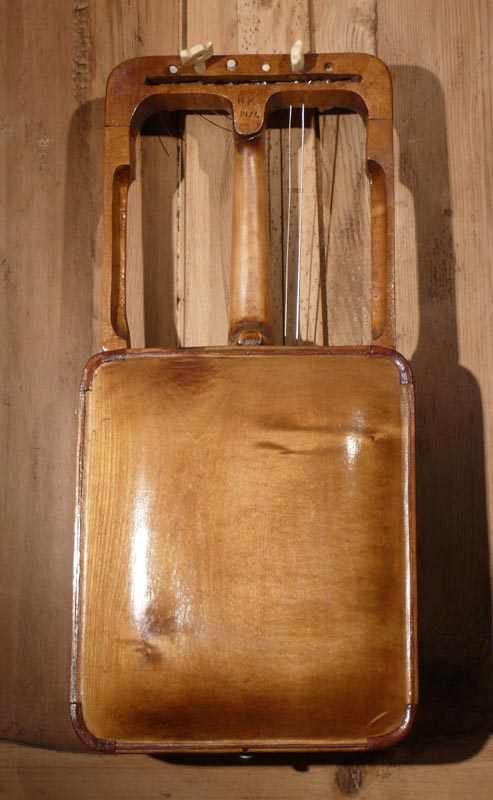
It is similar in construction to the classical lyre. It has a fingerboard without frets and 6 strings, usually G-g-D-d-C-c. The G string runs parallel to the fingerboard and was probably used for plucking. What is also noteworthy is that one sole of the foot here rests directly on the soul (i.e. the back) through a hole in the roof, only the other is in contact with the roof.
It was very popular in the Middle Ages, being used by minnesingers and troubadours, among others.
The crwth can be played in many different ways: you can hold it like a violin, like a cello, or even by resting the instrument against your chest and pulling the bow.
The instrument’s sound only differs from that of the modern violin in its range; its strength of tone, its ‘stability’, could justly compete with the violin.
no data

Reviews
There are no reviews yet.