Skip to main content Scroll Top
Instruments from all over the world!
  • Home
  • Europe
  • Hungary
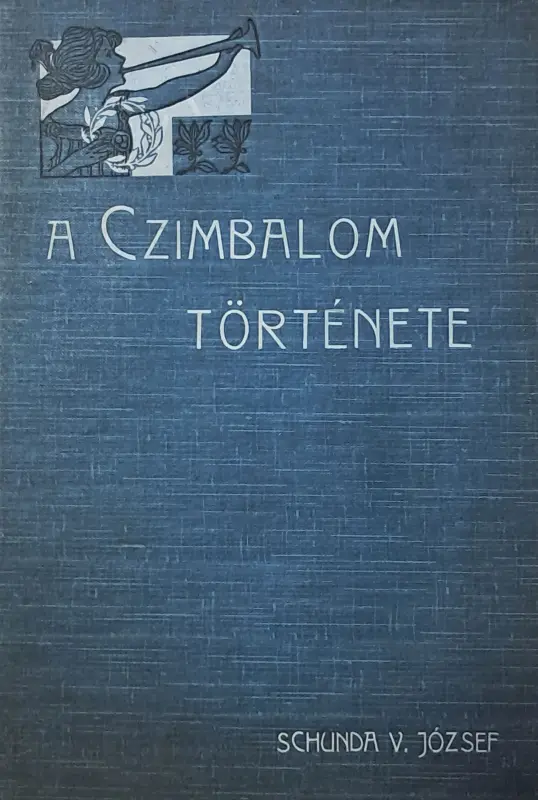
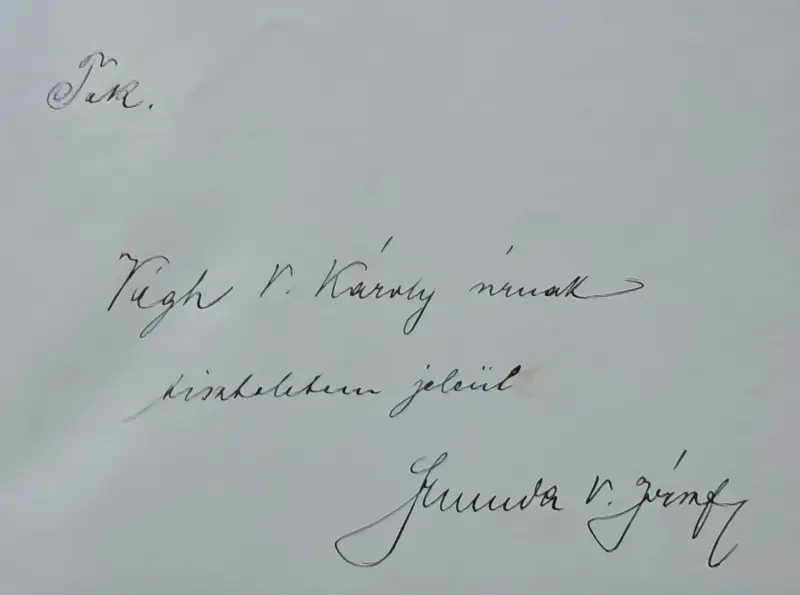
  • Book – József V. Schunda: The History of the Cimbalom – Signed – Károly V. Végh, Musical Instrument Dealer

Book – József V. Schunda: The History of the Cimbalom – Signed – Károly V. Végh, Musical Instrument Dealer

Add to favorites
Added to Cart View Cart Checkout
Added to Wishlist View Wishlist
Removed from Wishlist
Information:
Author and Title

Published by

Place of Edition

Year of Edition

Number of pages

136

Language

Hungarian

Size (length x width – mm)

214 x 154

Within other caregory

Book, Paper collectible

Sharing:
Categories:

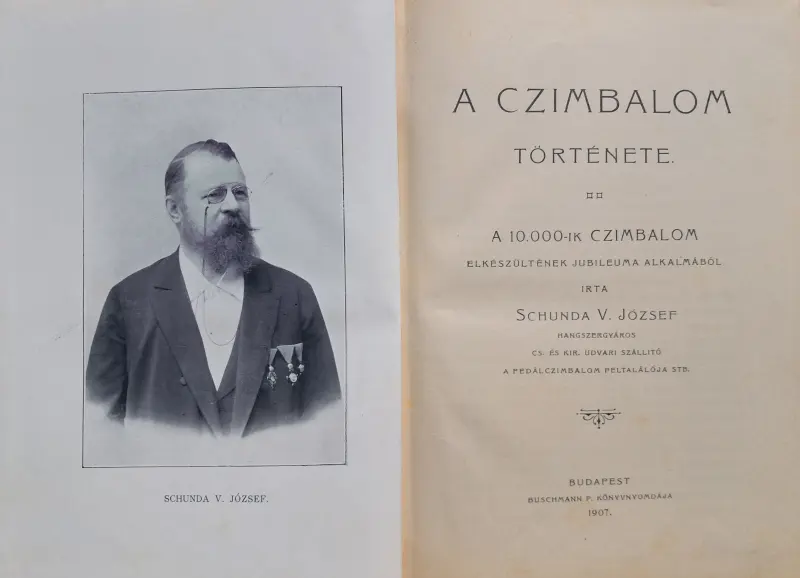
Vencel József Schunda

Born in Dubeč [now a district of Prague] on May 19, 1845 – died in Budapest on January 26, 1923; an instrument maker and music publisher of Czech origin.

Career

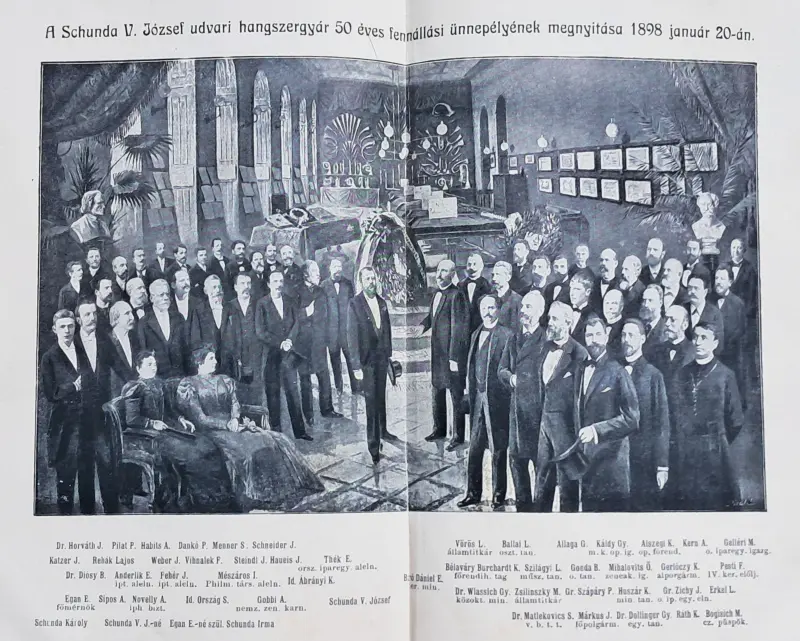
In 1856, he moved to Pest at the invitation of his uncle, József Schunda (1818–93). He became an apprentice at his uncle’s factory and was released as a journeyman there in 1863. Years of traveling abroad followed. He returned home in 1868 as a co-owner. In 1871, he took over the company, which operated at 26 Magyar Street. The company director, who was only 26 years old, began to develop the business with great care. The number of employees grew rapidly: there were 9 workers in 1873 and 45 in 1898. The product range covered nearly the entire spectrum of musical instruments. Most of the revenue came from supplying military bands.

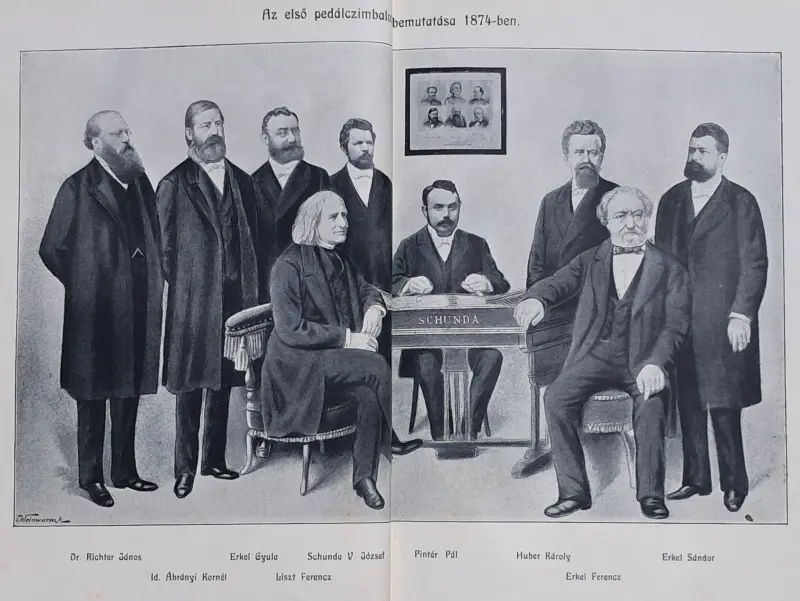
He is credited with perfecting the cimbalom and creating the modern tárogató. He exhibited the new type of cimbalom in Kecskemét in 1872 and constructed the first pedal cimbalom in 1874. He worked on the tárogató from 1888 to 1896. Between 1872 and 1906, some 10,000 cimbaloms—constantly refined—were produced in his workshops.

His less successful inventions included the folk harmonium (1877), the “Arion zither” (1880), and the “children’s cimbalom with steel-plate strings” (1887).

Schunda was an exceptionally skilled business leader. With effective marketing, he participated in domestic and international exhibitions (Vienna: 1873; Paris: 1878, 1900), devoting considerable attention to ensuring that artists, aristocrats, and journalists became familiar with his products. He exported to nearly the entire world. He patented his inventions and innovations. He also commissioned and published compositions and method books for his instruments. In the case of the cimbalom, he collaborated closely with Géza Allaga.

Works

-The Past, Present, and Future of the Cimbalom (Budapest, 1884)

-The History of the Imperial and Royal Court Musical Instrument Factory of József V. Schunda (Budapest, 1898)

-The History of the Cimbalom: On the Occasion of the Jubilee Marking the Completion of the 10,000th Cimbalom (with Géza Molnár, Budapest, 1907)

https://hu.wikipedia.org/wiki/Schunda_Vencel_J%C3%B3zsef


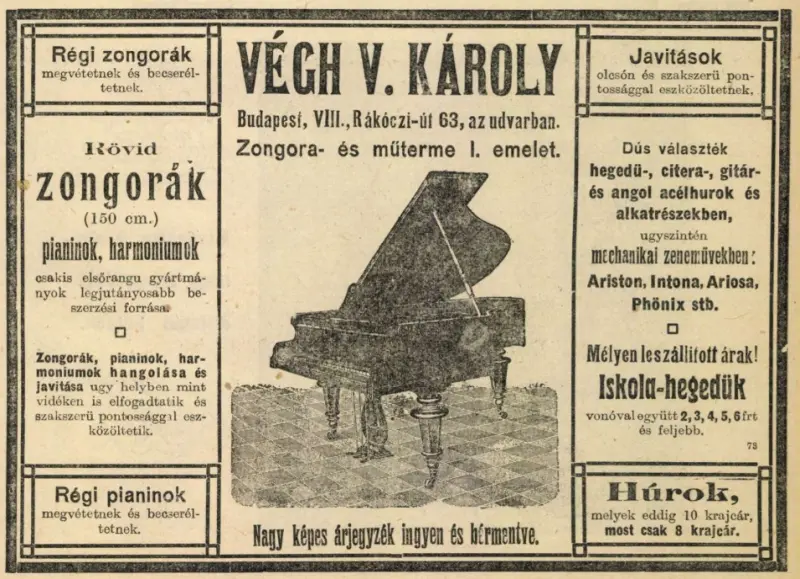
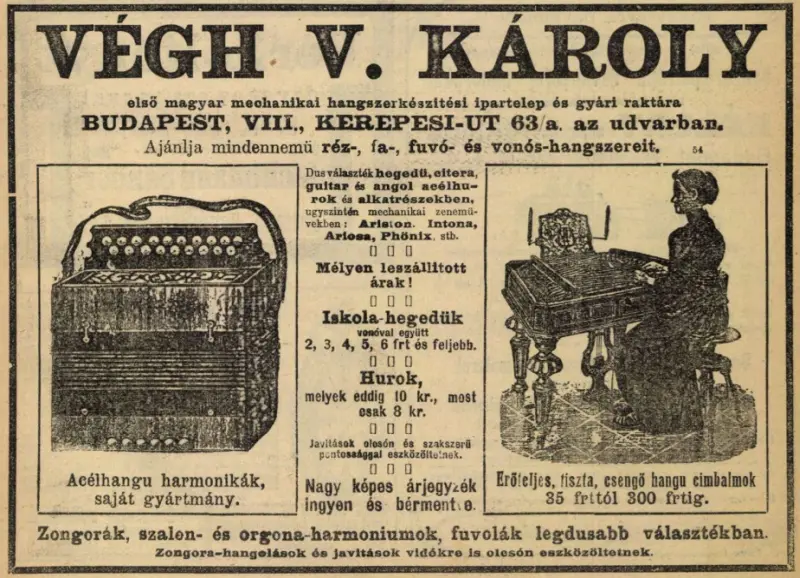
Károly V. Végh

Instrument maker and dealer. Budapest, 63 Rákóczi út, District VIII; piano shop and workshop on the first floor in the courtyard.

Branch store: 41 Szondy utca.

Sources of advertisements: 

Pesti Hírlap Calendar 1907 (Arcanum database)

Pesti Hírlap Calendar 1911—page 119 (Arcanum database)


Ferenc Buschmann

Born in 1837, died in 1917; he was the founder of the Hungarian Bookprinters’ Workers’ Association and the Self-Education Association, serving as the latter’s first president (1866). He was the first editor of *Typographia*, which was launched in 1869, though he held that position only for a short time. Later, he became a partner at the Bucsánszky printing house, and in 1872 he purchased the Mezőssy printing house. He was among the most enthusiastic advocates of collective bargaining and served on the first Budapest conciliation board established under this system

https://mek.oszk.hu/09100/09152/09152.htm

You might also be interested in this

Privacy Preferences
When you visit our website, it may store information through your browser from specific services, usually in form of cookies. Here you can change your privacy preferences. Please note that blocking some types of cookies may impact your experience on our website and the services we offer.