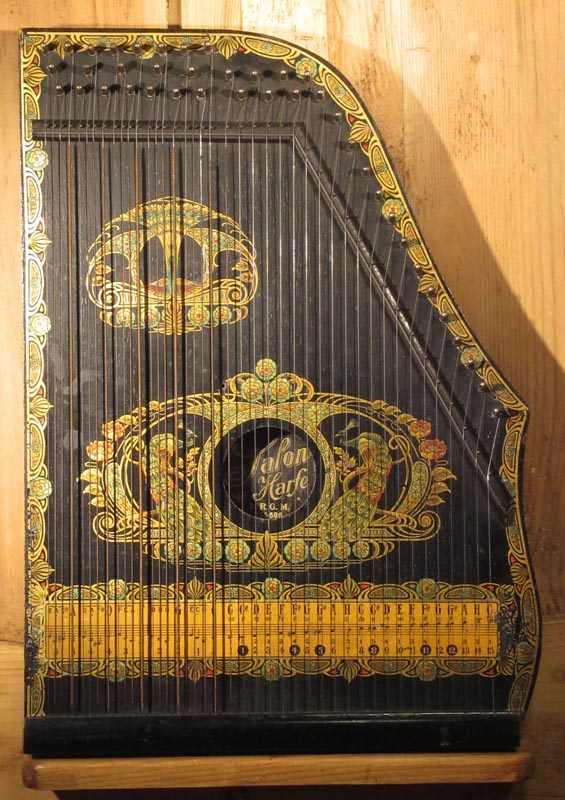
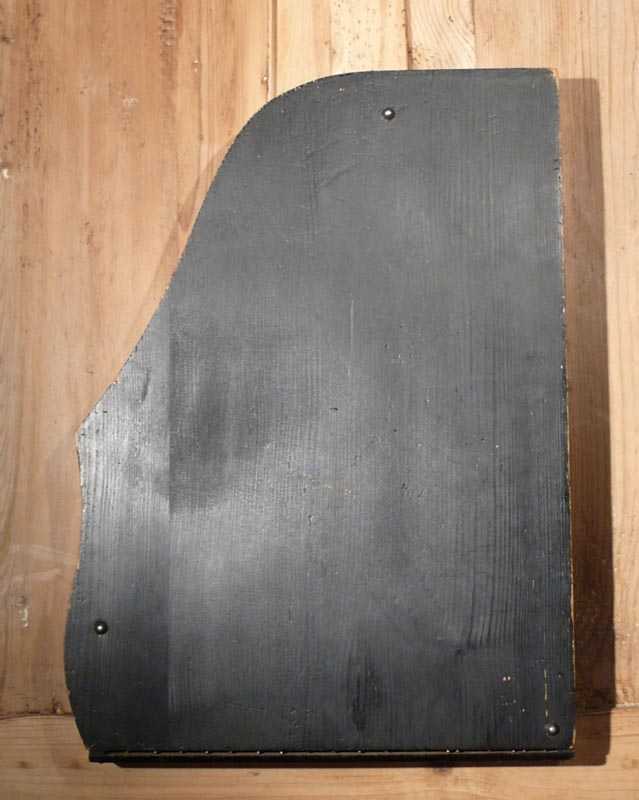
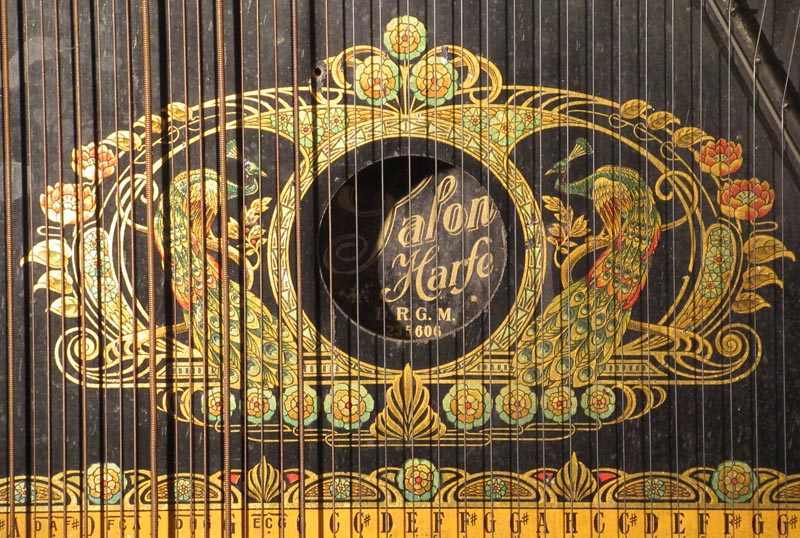
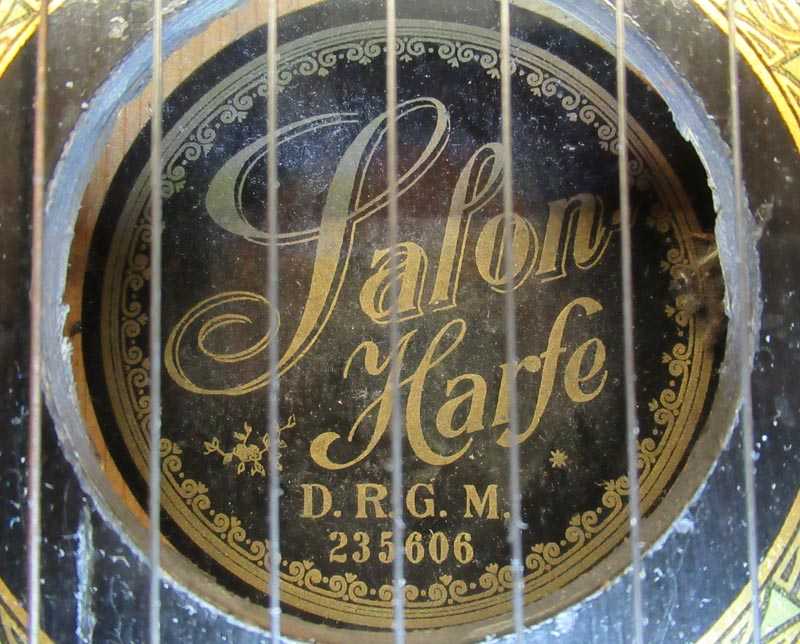
Zither - Guitar zither (Salon harp) – D.R.G.M. 235606
| Dimensions | 490 × 355 × 50 mm |
|---|---|
| Name of musical instrument | |
| Type of musical instrument | |
| Typical place of occurrence | |
| Date of manufature of instrument | |
| Place of manufacture | |
| Made by | |
| Restored by | |
| Scale | |
| Number of strings | |
| How to play musical instrument | |
| Continent | |
| Country |
The fretless guitar-zithers were developed by Friederich Menzenhauer (1858-1937), a German-born, who lived in the USA from 1882, at the end of the 19th century. The models produced in Berlin, Kliegenthal and Markneukirchne are characterised by the use of a backing sheet music.
https://hu.museum-digital.org/object/207522?navlang=hu
The utility model is the “little brother” of the patent and an industrial property right. The differences to the patent have become smaller with the latest amendments to the Utility Model Act (GebrMG). At the end of 2017, 81,001 utility models were in force in Germany.
Protected products are often labelled with the abbreviation “DBGM” for ‘German Federal Utility Model’.
As a result of increasing industrialisation and the increased trade in goods, but above all in the course of the increasing protection of economic interests at national level, a utility model protection law was enacted after the foundation of the German Reich, similar to the law on the protection of designs (1876). An imperial law of 1 June 1891 created the legal requirements for the German Empire, so that the Imperial Patent Office introduced the “German Imperial Utility Model” on 1 October 1891. Numerous products were thus labelled D.R.G.M. between 1891 and around 1945, often with the addition of the design number, which today makes it possible to narrow down the date of origin of some historical devices to a specific decade. Even a few years after the Second World War, this labelling was occasionally still common in West Germany, and the abbreviation then became “D.B.G.M.” after the founding of the Federal Republic of Germany. (German Federal Utility Model)
no data

Reviews
There are no reviews yet.