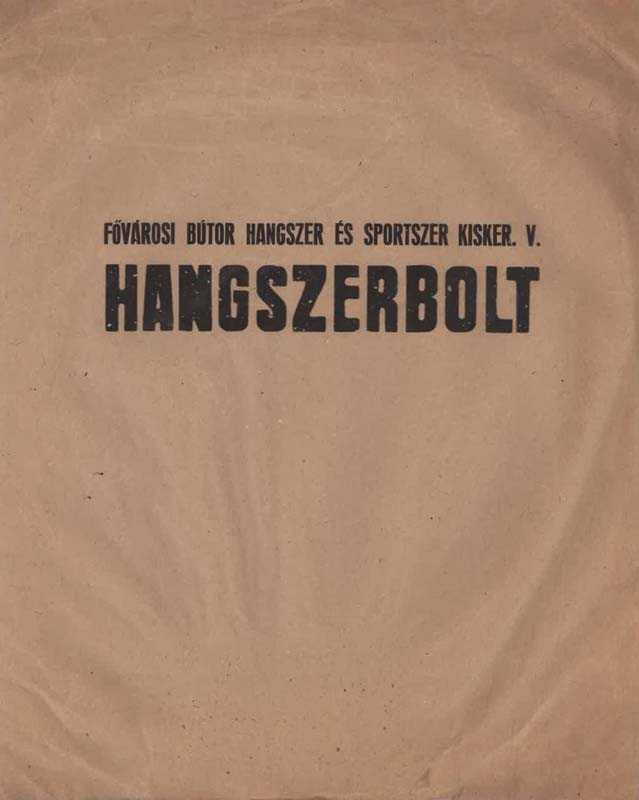
Print - Bag - Metropolitan Furniture, Musical Instrument and Toy Retail Trade Company
| Author and Title | Print – Bag – Metropolitan Furniture, Musical Instrument and Toy Retail Trade Company |
|---|---|
| Published by | |
| Place of Edition | |
| Year of Edition | |
| Number of pages | 1 |
| Language | Hungarian |
| Country | |
| Size (length x width – mm) | 330 x 267 |
| Within other caregory | Print, Paper collectible |
Address: Budapest, V. Deák Ferenc utca 17.
The predecessor of the Triál Sport-, Musical Instrument and Toy Wholesale Company was the FŐBUHA (Fővárosi Bútor Hangszer és Sportszer Kiskereskedelmi Vállalat = Metropolitan Furniture, Musical Instrument and Toy Retail Trade Company), which was split off in 1967, from then on it used a new logo.
https://bu.hu.museum-digital.org/object/679273
In 1968, the building at 17 Deák Ferenc Street in the V. district became the headquarters of the FŐBUHA.
https://hu.museum-digital.org/object/795673?navlang=hu
FŐBUHA was a company controlled by the Metropolitan Council. In 1978 it was dissolved by successors. Its activities were taken over by other companies from 1st January, 1979.
Under its name, it sold furniture, musical instruments, sports equipment, toys and souvenirs. The word had already caused widespread consternation among customers during the company’s existence. It is not surprising that the title of the Népszava report on the closure included the word ‘buhátlanság’, a humorous reference to ‘ruhátlanság = lack of clothes’.
In the 1950s, the commercial enterprises managed by the Metropolitan Council were still organised on a territorial basis, district by district. Several of these were merged to increase efficiency: the public utilities were reorganised in 1971 and the catering companies in 1967. At the same time, the reorganisation of the retail trade in industrial goods required more organisational effort, as they were separated by profession rather than by territory. The reorganisation – and consequent closure – of FŐBUHA did not take place until 1978.
https://antikva.hu/gazdasagtortenet/fobuha-fovarosi-butor-hangszer-sportszer-kiskereskedelmi-v
FŐBUHA commercial: