Skip to main content Scroll Top
Instruments from all over the world!
  • Home
  • Europe
  • Russia
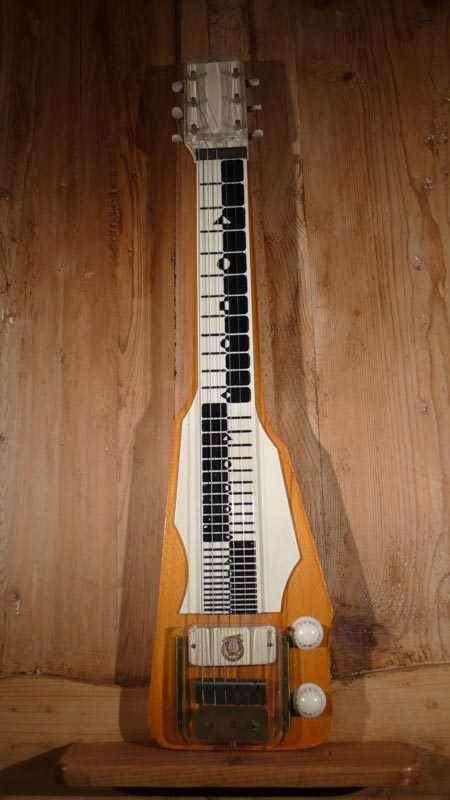
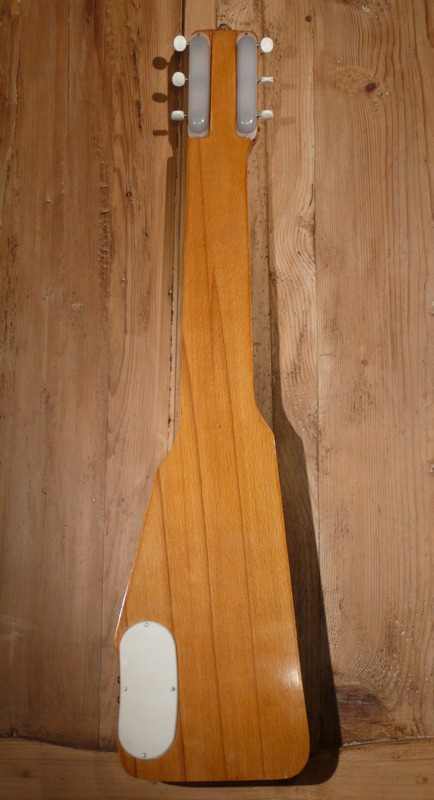
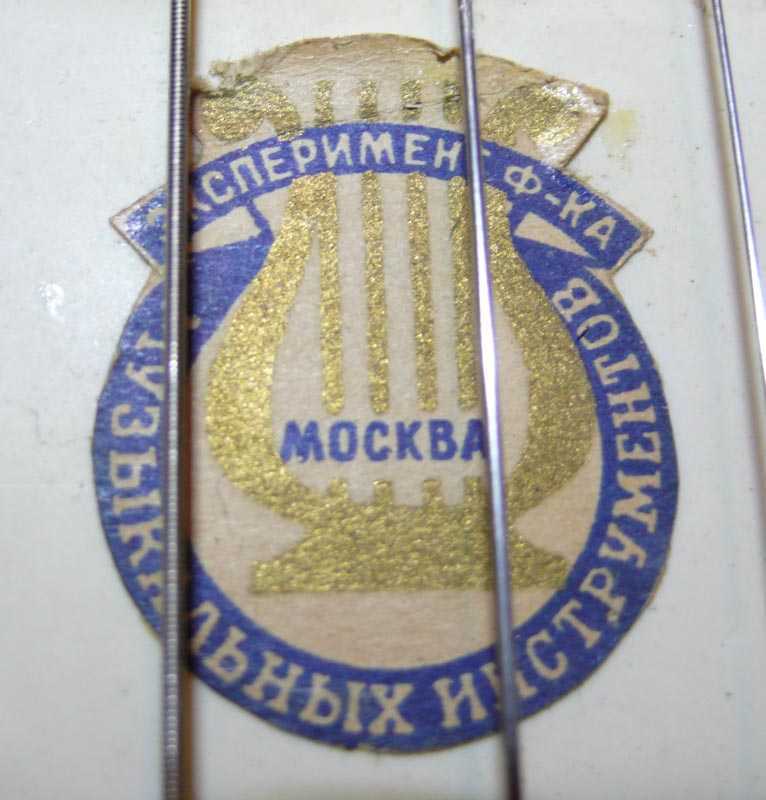
  • Guitar – Lap steel guitar – Moscow Experimental Factory Of Musical Instruments

Guitar - Lap steel guitar - Moscow Experimental Factory Of Musical Instruments

Add to favorites
Added to Cart View Cart Checkout
Added to Wishlist View Wishlist
Removed from Wishlist
Information
Dimensions 800 × 185 × 55 mm
Name of musical instrument

Type of musical instrument

Typical place of occurrence

Date of manufature of instrument

Place of manufacture

Made by

Restored by

Scale

Number of strings

How to play musical instrument

Continent

Country

Sharing:
Categories:

Guitar - Lap steel guitar - Moscow Experimental Factory Of Musical Instruments

Information
Dimensions 800 × 185 × 55 mm
Name of musical instrument

Type of musical instrument

Typical place of occurrence

Date of manufature of instrument

Place of manufacture

Made by

Restored by

Scale

Number of strings

How to play musical instrument

Continent

Country

Sharing:
Categories:

The lap steel guitar, also known as a Hawaiian guitar, is a type of steel guitar without pedals that is typically played with the instrument in a horizontal position across the performer’s lap. Unlike the usual manner of playing a traditional acoustic guitar, in which the performer’s fingertips press the strings against frets, the pitch of a steel guitar is changed by pressing a polished steel bar against plucked strings (from which the name “steel guitar” derives). Though the instrument does not have frets, it displays markers that resemble them. Lap steels may differ markedly from one another in external appearance, depending on whether they are acoustic or electric, but in either case, do not have pedals, distinguishing them from pedal steel guitars.

Spanish guitars were introduced into the Hawaiian Islands as early as the 1830s. The Hawaiians did not embrace the standard guitar tuning that had been in use for centuries. They re-tuned the guitars to make a chord when all the strings were sounded together, known as an “open tuning”. This was called “slack-key”, known in Hawaiian as “kī hōʻalu”, because certain strings were “slackened” to achieve it.  Hawaiians learned to play fingerstyle this way, creating melodies over the full resonant tones of the open strings, and the genre became known as slack-key guitar.

The steel guitar was the first “foreign” musical instrument to gain a foothold in American pop music. It originated in the Hawaiian Islands about 1885, popularized by an Oahu youth named Joseph Kekuku, who became known for playing a traditional guitar by laying it across his lap and sliding a piece of metal against the strings to change the pitch. The instrument’s distinctive portamento (≈glissando) sound, characterized by a smooth gliding between notes, became popular throughout the islands. American popular culture became fascinated with Hawaiian music during the first half of the twentieth century – to the degree of becoming a musical fad. Americans were curious about the lap steel instrument featured in its performance, and came to refer to it as a “Hawaiian guitar”, and the horizontal playing position as “Hawaiian style”. Hawaiian music began its assimilation into American popular music in the 1910s, but with English lyrics; a combination Hawaiians called hapa haole (half-white). In the 1930s, the invention of electric amplification for the lap steel was a milestone in its evolution. It meant that the instrument could be heard equally with other instruments, that it no longer needed a resonance chamber to produce its sound, and that electrified lap steels could be manufactured in any shape (even a rectangular block), with little or no resemblance to a traditional guitar.

In the early twentieth century Hawaiian music and the steel guitar began to meld into other musical styles, including blues, jazz, gospel, country music and, particularly, the country music sub-genres Western swing, honky-tonk, and bluegrass. Lap steel pioneers include Sol Hoopii, Bob Dunn, Jerry Byrd, Don Helms, Bud Isaacs, Leon McAuliffe, Josh Graves, Pete Kirby, and Darick Campbell.

Conceptually, a lap steel guitar may be likened to playing a guitar with one finger (the bar). This abstraction illustrates one of the instrument’s major limitations: its constraint to a single chord that is not changeable during a performance without re-tuning the instrument. An early solution was to build lap steel guitars with two or more necks, each providing a separate set of differently-tuned strings on a single instrument. The performer’s hands could move to a different neck at will. Although in the early 1940s, elite players recorded and performed with these multi-neck guitars, most musicians could not afford them. The problem was addressed in 1940 by adding pedals to the lap steel to change the pitch of certain strings easily, making more complex chords available on the same neck. By 1952, this invention revolutionized how the instrument was played, in many ways making it virtually a new instrument, known as a “pedal steel”. An overwhelming majority of lap steel players adopted the pedal design, and, as a result, the lap steel became largely obsolete by the late 1950s, with only pockets of devotees in country and Hawaiian music remaining.

There are three categories of lap steel guitars:

-Acoustic lap steel guitars: These are traditional acoustic steel-string acoustic guitars modified to be played on the performer’s lap. The modification is to raise the strings higher off the fingerboard than a traditional guitar, which can be done by inserting an adapter on the instrument’s bridge and its nut. This prevents the steel bar from hitting against the frets.

-Dobro-type guitars or National guitars: These are typically acoustic steel guitars with a large aluminum cone under the bridge, called a resonator, that increases volume output.  Wood-body resonator guitars are called “Dobros” and steel bodied ones are called “Nationals”.  The types do not sound the same — the Nationals are brassier and are usually preferred by blues players.  Either type offers round necks (Spanish) or square necks (Hawaiian).  Square necks are sometimes necessitated both by the use of thicker strings and by the increased force the instrument is subject to as a consequence of its raised strings.

-Electric lap steel guitars: Describes instruments that are specifically designed to be played horizontally and feature an electric pickup so that they do not require any resonance chamber. Guitars in this category may differ markedly from one another in external appearance, and include instruments made from rectangular solid blocks of wood.  Some may be small enough to be played on the lap; others may have more than one neck (making the instrument heavier), and may be built on a frame with legs, which is then known as a console steel.

https://en.wikipedia.org/wiki/Lap_steel_guitar

no data

Reviews

There are no reviews yet.

Add a review

For security, use of CloudFlare's Turnstile service is required which is subject to the CloudFlare Privacy Policy and Terms of Use.

You might also be interested in this

Privacy Preferences
When you visit our website, it may store information through your browser from specific services, usually in form of cookies. Here you can change your privacy preferences. Please note that blocking some types of cookies may impact your experience on our website and the services we offer.