Güiro - Ahellma
| Dimensions | 268 × 37 × 37 mm |
|---|---|
| Name of musical instrument | |
| Type of musical instrument | |
| Typical place of occurrence | |
| Date of manufature of instrument | |
| Place of manufacture | |
| Made by | |
| Restored by | |
| Scale | |
| How to play musical instrument | |
| Continent | |
| Country |
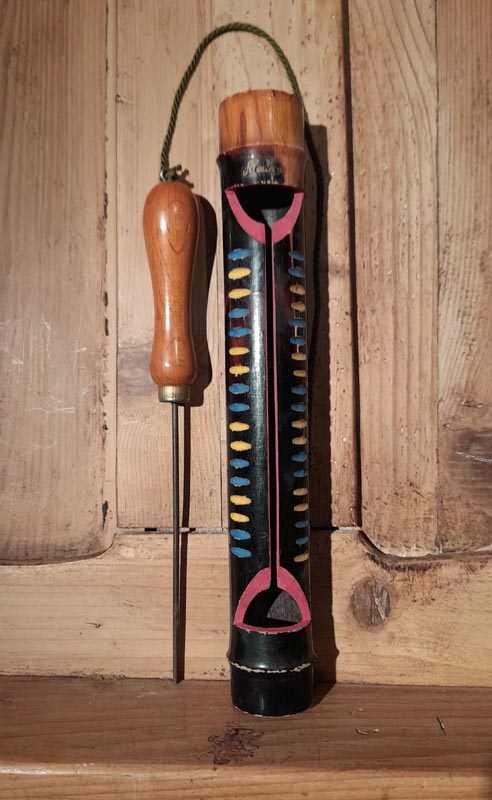
The güiro is a Latin American idiophone instrument played by rubbing and scratching. It is nothing more than an elongated, hollow body made of steal, wood, thick reeds, sometimes metal, with densely parallel grooves running across it. A wooden stick, sometimes a comb-like instrument, is drawn through them, making a crackling, whirring, buzzing sound. An instrument of Indian origin, it is used mainly in the folk and popular music of Cuba, the Dominican Republic and Puerto Rico. In classical music it first appeared in Igor Stravinsky’s Le Sacre du Printemps, and later in works by Varèse, Chávez, Stockhausen and Berio.
Other names for different versions of the güiro are: calabazo, guayo, ralladera, rascador, raspador. The wooden version is called reco-reco, the reed version sapo cubano. The word güiro comes from the language of the Taíno Indians of the Caribbean.
no data

Reviews
There are no reviews yet.